Is It Legal to Check If a Number Is on WhatsApp or Telegram?
For a business checking its own customers' numbers, usually yes, when three things hold: the numbers were collected lawfully, the check serves a purpose those customers would expect, and you treat the result as the personal data it is. The check itself sends nothing to anyone. What gets businesses into trouble is the list they check and what they do next: a bought or scraped list, or messages to people who never agreed to hear from them.
This guide covers the rules that matter in the EU, the UK and the US, the platforms' own terms, and a checklist to follow before you upload a list. It is general information, not legal advice: for your own case, ask a lawyer who knows the law where you and your customers are.
Whose numbers, and why: the three questions that decide it#
A phone number or email address that belongs to a person is personal data: the GDPR covers "any information relating to an identified or identifiable natural person". Sending a list to a checking service and storing the results is processing it. So the real question is not "is checking allowed?" but three narrower ones:
- Whose numbers are they? Your own customers, sign-ups and leads who gave you their details are a different case from a list you bought, rented or scraped.
- Why are you checking? Choosing a support channel, cleaning dead numbers or catching fake sign-ups is close to why people gave you their number. Finding out about a stranger is not.
- What happens next? A check tells you that a channel exists. Whether you may send anything through it depends on consent and the platform's rules.
In the EU and the UK: what the GDPR expects#
The EU GDPR and the UK GDPR share the principles a list check touches.
A lawful basis, usually legitimate interests. Under Article 6(1)(f), processing is lawful when it is necessary for your legitimate interest and the person's rights do not override it. The European Data Protection Board's Guidelines 1/2024 say "three cumulative conditions must be met"; the UK's ICO calls them the purpose, necessity and balancing tests and recommends writing your assessment down. What tips the balance is expectation: Recital 47 weighs whether people "reasonably expect" the processing, given their relationship with you. A customer who gave you a number for order updates can expect you to find the best way to reach them; a stranger whose number was scraped cannot.
Purpose, minimisation and storage. Article 5 bars processing "in a manner that is incompatible" with the original purpose, limits data to "what is necessary", and keeps it no longer than needed. In practice: upload only the number column, choose the plainest check that answers your question (a yes or no is enough to pick a channel), and delete the results when you are done.
A contract with the checking service. The service works on your list for you, which makes it your processor. Article 28 allows only processors "providing sufficient guarantees", under a written contract by which they act "only on documented instructions" from you. The ICO lists what that contract must include.
Objections end it. Under Article 21, once someone objects to direct marketing, their data "shall no longer be processed for such purposes". Take unsubscribed customers out before a check made for marketing.
Messages need their own permission. Marketing texts and emails fall under the ePrivacy rules (Directive 2002/58/EC, Article 13) and, in the UK, PECR. The ICO's electronic mail marketing guidance makes consent the default, with a narrow "soft opt-in" for your own previous customers: details collected during a sale, your own similar products, and an easy opt-out every time. It never covers a bought list.
In the US: TCPA, CAN-SPAM and state privacy laws#
US law mostly regulates the message rather than the check.
Texts and calls: the TCPA. The FCC's guide Stop Unwanted Robocalls and Texts says FCC rules ban autodialed texts to a mobile phone without the owner's prior consent, and "commercial texts require written consent". The FCC treats a text as a call, and its December 2023 order confirmed that the National Do Not Call Registry protects texts too. People may opt out "at any time and in any reasonable manner"; the rules on revoking consent applied from April 11, 2025 and were adjusted again in an October 2026 order, so check the current text before you build an opt-out flow. A number that comes back "on WhatsApp" gives you none of this consent.
Email: CAN-SPAM. The FTC's compliance guide requires honest headers, identifying the message as an ad, your valid physical postal address, a clear opt-out, and honoring it "within 10 business days".
California and other states. The CCPA, as amended by the CPRA, gives California residents the right to know, delete, correct and opt out of the sale or sharing of their personal information (California Attorney General). Per the California Privacy Protection Agency, it applies to businesses with gross annual revenue of $26.625 million or more, those handling the data of 100,000 or more California residents or households, or those earning half their revenue from selling or sharing it. It reaches your checking service too: under the CCPA regulations (sections 7050 and 7051), a vendor without a compliant contract is not a "service provider", and handing it personal information may count as a sale or sharing. The Congressional Research Service counted at least 19 states with comprehensive privacy laws in August 2025.
What WhatsApp and Telegram allow#
WhatsApp. The WhatsApp Business Messaging Policy lets a business contact people only if they gave it their mobile number and agreed to receive its messages on WhatsApp, and tells businesses not to "spam, or surprise people". WhatsApp's Terms of Service forbid bulk messaging and auto-messaging, and collecting information about users "in any impermissible or unauthorized manner". A check can tell you which customers to invite to your WhatsApp channel; each still opts in before you write.
Telegram. Telegram's Terms of Service forbid using it "to send spam or scam users". Users also control who can find them by number: with "Who Can Find Me By My Number" set to "My Contacts", strangers cannot match their profile to it. So "not registered" is not proof of no account, and someone who chose privacy should not be chased by other means.
What is clearly not OK#
- Bought, rented or scraped lists. Those people never gave you their number, cannot expect your processing, and fall outside WhatsApp's policy.
- Looking up a private person. Checking a number to learn who someone is or whether they are online is profiling, not customer service.
- Messaging everyone who comes back registered. Registration is not consent.
- Checking people who opted out, or keeping results for years "in case".
A checklist before you check a list#
- Know where every number came from: your own customers, sign-ups or leads.
- Write down the purpose, for example "choose which customers to invite to our WhatsApp support channel". In the EU and UK, keep a short legitimate interests assessment.
- Remove everyone who opted out or objected to marketing.
- Send only what the check needs: the number column and the plainest check.
- Have a contract with the checking service: a processor agreement under GDPR Article 28, a service provider contract under the CCPA.
- Set how long you keep the results, and delete them when the decision is made.
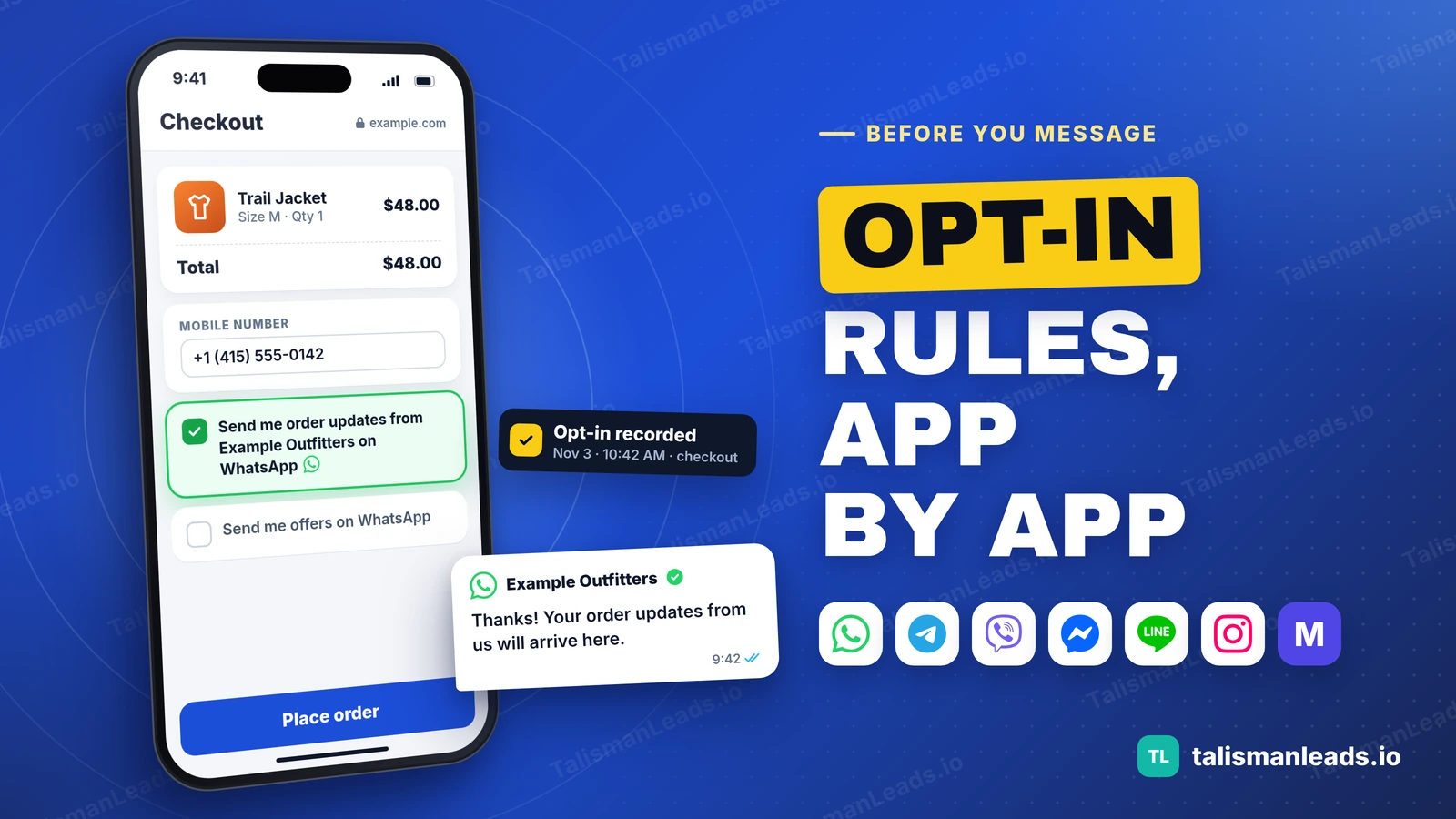
- Message only people who opted in, with TCPA consent for texts, CAN-SPAM rules for email, and the platform's opt-in.
How TalismanLeads handles the lists you upload#
Before you upload anywhere, know what the service does with the data. Here is what ours says, in its own words.
- What a check does. Our Terms of Service: the service "checks registration and validity only. It does not send messages, access account contents, or require any login, QR code or SIM."
- What you agree to. That you have "the legal right and any required consent to process the phone numbers and email addresses you upload", and will follow data-protection, anti-spam and marketing laws and the platforms' terms.
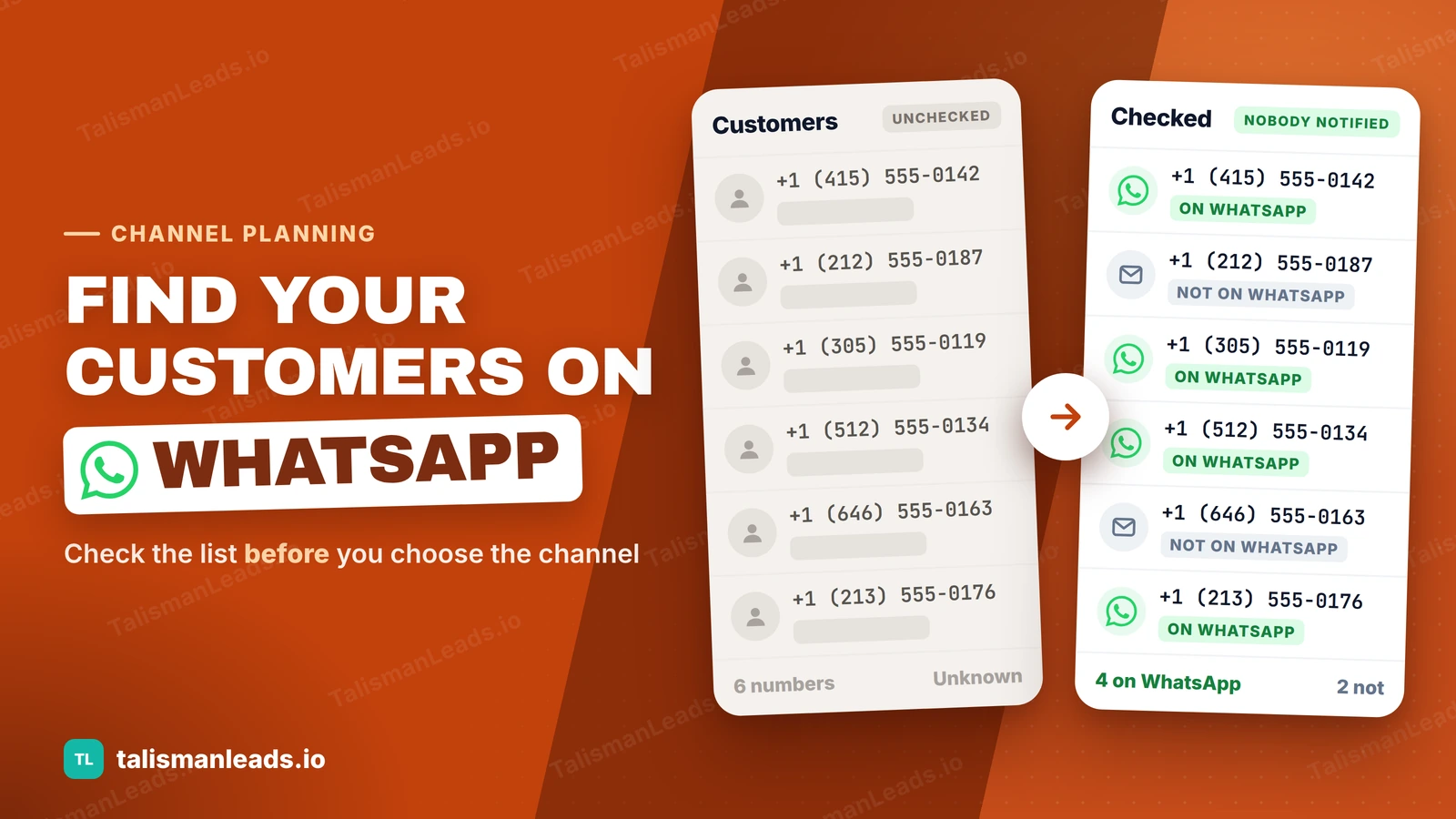
- What a result contains. The plain WhatsApp and Telegram number checks return each number in international format, registered or not registered, in separate files.
- Who sees your lists. Our Privacy Policy: "We never sell or rent the lists you upload." Vendors such as data-check providers "process data on our behalf under confidentiality obligations".
- How long we keep them. "We keep uploaded lists and results so you can download them again", and you can ask for them to be deleted at any time. An upload that is priced but never confirmed is deleted after a day. The API's request log is kept for 90 days, "and never the lists or results themselves".
- Deleting and exporting. Ask at support@talismanleads.io. If your business needs a written processor agreement, ask there before uploading, and upload only once you have what your law requires.
The WhatsApp Number Checker costs $0.69 per 10,000 numbers and the Telegram Number Checker $3.20 per 10,000, with the exact price shown before anything is charged. Businesses can try them on their own list with a $5, 14-day free trial.
Frequently asked questions#
Is it legal to check if a number is on WhatsApp?#
For your own customers' numbers, collected lawfully and checked for a purpose they would expect, it usually is, though the rules differ by country. Checking a bought or scraped list, or messaging people who never opted in, is where it stops being lawful.
Does the person know their number was checked?#
No. No message, call or notification is sent to the numbers you check.
Do I need my customers' consent to check their numbers?#
Not always. Under the GDPR, legitimate interests can be the lawful basis if it passes the purpose, necessity and balancing tests. Consent matters most when you send marketing: under PECR and ePrivacy in Europe, the TCPA for US texts, and WhatsApp's own policy.
Can I message everyone who comes back as registered?#
No. A registered result means a channel exists, not that the person agreed to hear from you there. Invite customers to opt in and write only to those who do.
Is it legal to check a list I bought?#
It is the case most likely to break the rules: the people on it never gave you their number, and WhatsApp lets a business contact only people who did. Build your list from your own customers instead.
If your list passes the checklist, the WhatsApp Number Checker shows which of your customers you could invite to WhatsApp, without contacting any of them.
Was this helpful?