Opt-In Rules on WhatsApp, Telegram, Viber and Other Apps
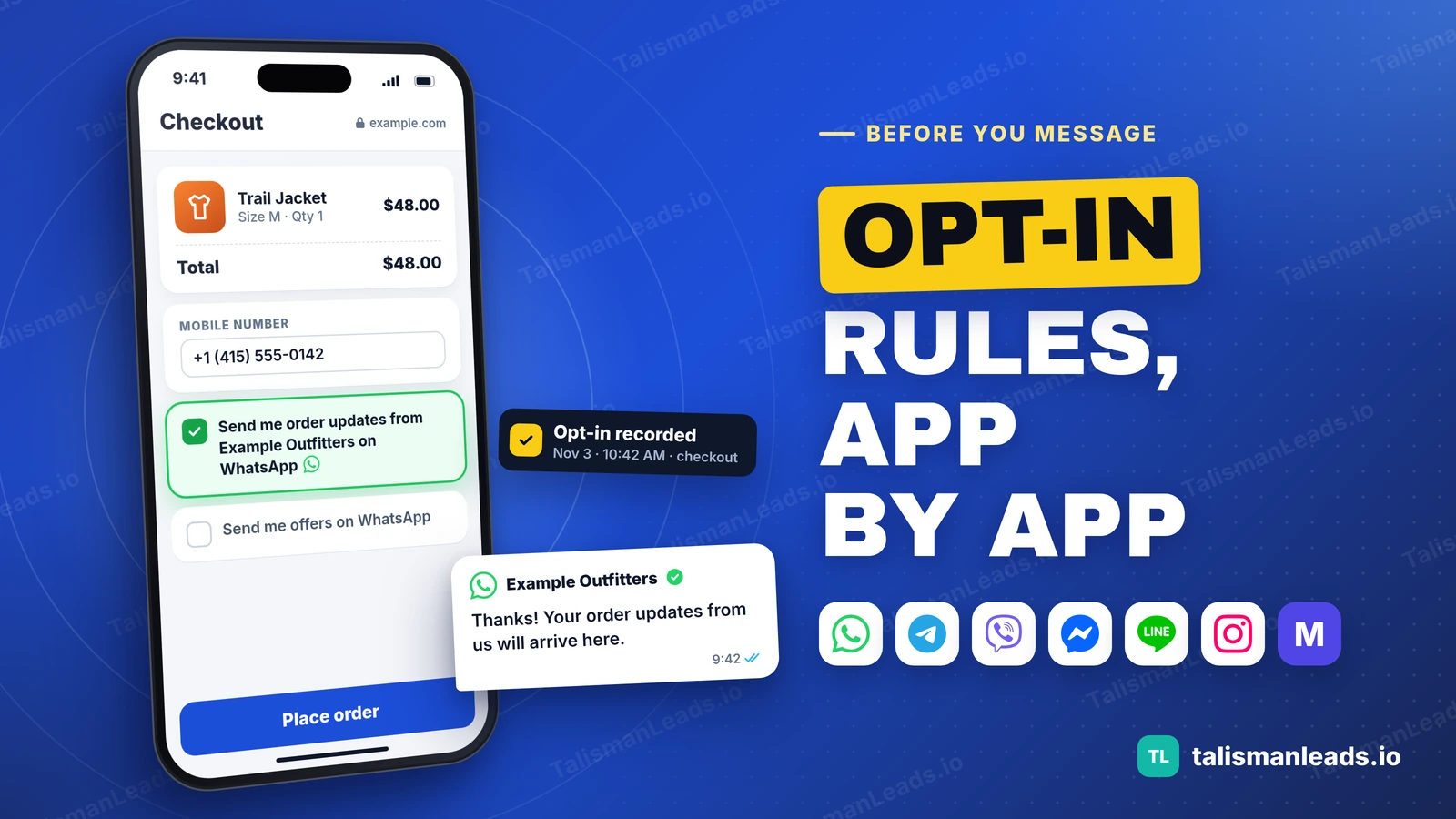
Every major messaging app makes the customer take the first step. WhatsApp and Viber want an opt-in that names your business before you send anything. Telegram, Messenger, Instagram, LINE and MAX go further: the customer has to message you, start your bot or add your account first. Below is what each platform's own business policy says, then how to collect opt-in, what to record and how to honour an opt-out. Every rule was read on the platform's pages on November 23, 2026; they change often, so check them before you launch. This is general information, not legal advice.
WhatsApp: a written opt-in that names your business#
Meta's WhatsApp Business Messaging Policy (updated September 23, 2026) lets you contact people only if they gave you their number and you "received opt-in permission" confirming they want messages from you. Meta's opt-in guide adds two requirements: the opt-in must clearly state that the person is agreeing to hear from your business, and it must state your business's name. Since a November 2024 update, the opt-in "can be general and not specifically for WhatsApp", provided it meets local law. Meta lists SMS, a website, a phone call (IVR) and a signed paper form as accepted ways to collect it.
After the opt-in, these rules decide what you can send:
- Templates start conversations. A business "may only initiate conversations using an approved Message Template". Meta sorts templates into marketing, utility and authentication.
- The customer service window. When a customer messages or calls you, a 24-hour window opens in which you can reply freely (pricing page, updated November 18, 2026). Outside it, templates only.
- Limits. A new business portfolio can send templates to 250 people in a rolling 24 hours. The limit rises through 2,000, 10,000 and 100,000 to unlimited while quality stays high (messaging limits). People can block or report you, and Meta rate-limits a business whose quality stays low.
- Opt-outs. You "must respect all requests (either on or off WhatsApp)" to block, stop or opt out.
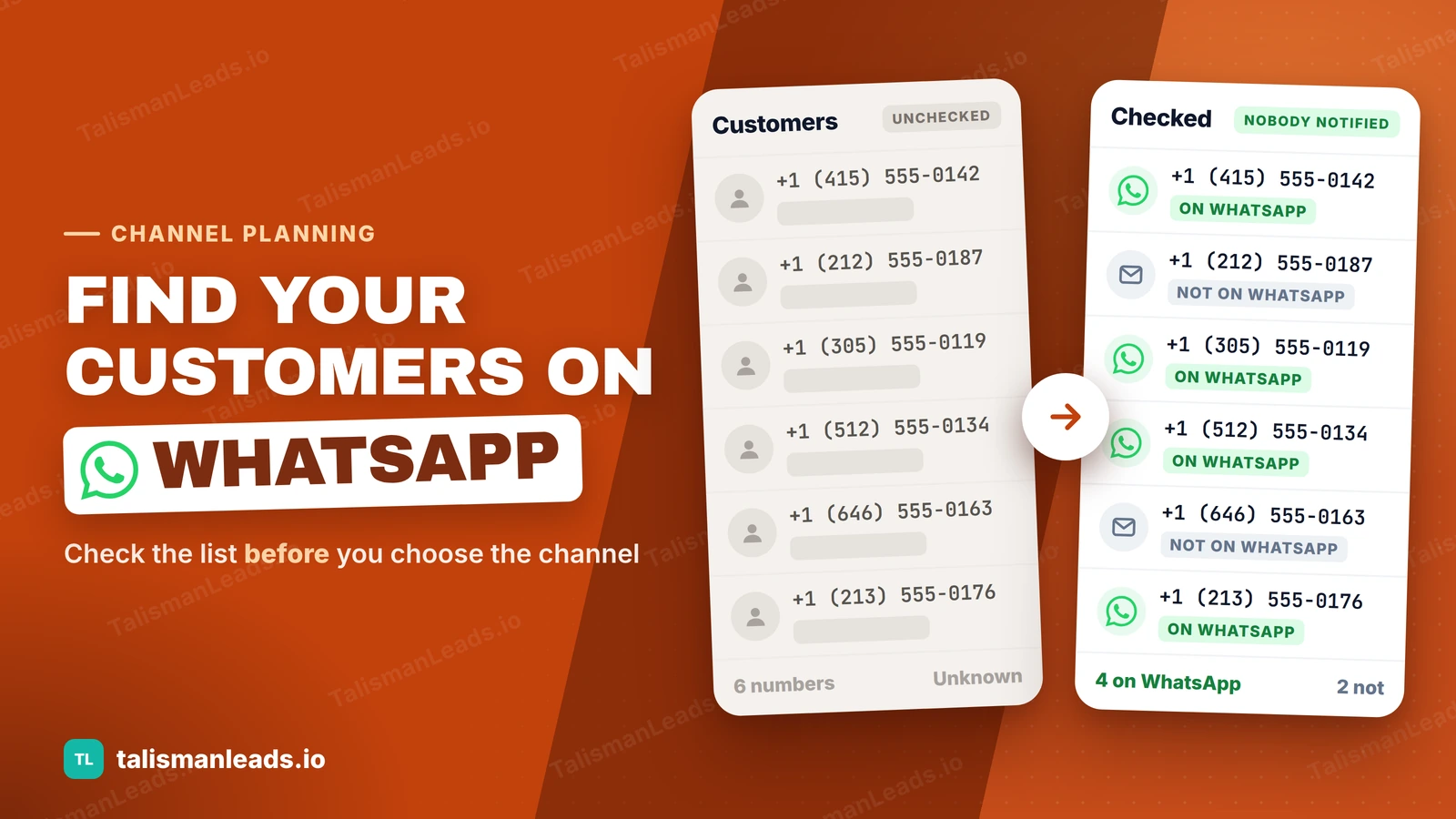
One rule matters to every US business. Meta's per-user limits page says WhatsApp "does not currently deliver marketing template messages" to US numbers (+1 with a US area code). For a US list, a WhatsApp opt-in today mainly covers order updates, account notices and replies. For finding which customers are on WhatsApp, see How to Check Which of Your Customers Use WhatsApp.
Telegram: the customer starts the bot#
Telegram's bot documentation is blunt: "Bots can't start conversations with users. A user must either add them to a group or send them a message first." A deep link (t.me/yourbot?start=…) can pass a value to your bot, so you can tell which of your pages the person came from. If someone blocks the bot, Telegram tells it, and you stop.
Telegram's Bot Developer Terms say a bot "must not harass or spam users with unsolicited messages". A bot can broadcast about 30 messages a second, or up to 1,000 with paid broadcasts, and the terms forbid using those higher limits to spam. Channels are one-way: customers choose to join, and only admins post. Telegram's spam FAQ warns that messaging random strangers gets an account limited. More in How to Check If a Number Is on Telegram, in Bulk.
Viber: proof of consent, or a subscribed user#
Viber has two routes, each with its own rule:
- Business Messages go through Viber's approved partners and can reach a customer by phone number. Viber's partner guidelines (June 2025) require the customer's opt-in "before you can send them any message", and you must keep proof of it. The consent must say the messages come over Viber and must name the business. Anything sent without it "will be considered spam". Customers can block a business at any time, and Viber watches block rates.
- Chatbots can message only subscribed users (REST Bot API). A user subscribes by sending the bot a first message. Merely opening the chat does not count. Since February 5, 2024, bots run on commercial terms: replies within 24 hours of a subscriber's message are free, and messages the bot starts are paid.
More in How to Check If a Number Is on Viber, in Bulk.
Messenger and Instagram: a window after the customer writes#
Meta's send-messages guide says: "To send messages to a person on Messenger or Instagram, the conversation must be initiated by that person." Each message from the customer opens a standard window of 24 hours, or up to 7 days after a click-to-Messenger or click-to-Direct ad. Promotions are allowed inside it.
After the window on Messenger:
- Message tags. These are only for non-promotional messages. On April 27, 2026 Meta retired the event, purchase and account update tags (changelog) and pointed businesses to utility templates or Marketing Messages. A person on your staff can still reply within 7 days with the Human Agent tag.
- Marketing Messages need the person to accept an opt-in request. Every message carries an opt-out link, and a Page can send each person at most one a day. They are offered only in listed countries, the US among them.
Instagram is narrower. Your account can message someone "only after an Instagram user has sent" it a message (Instagram messaging API). The same 24-hour window applies, plus the 7-day Human Agent tag. You may also send one private reply to someone who commented, within 7 days of the comment. Anything further waits for their answer. More in How to Check If a Number Has Facebook Messenger and Which Customers Are on Instagram, LinkedIn or Threads?.
LINE and MAX: friends, subscribers and blocks#
On LINE, a business sends from a LINE Official Account to users who added it as a friend (Messaging API). It can reply, push to one friend or broadcast to all of them. Messages to users who blocked the account are not delivered. LINE also offers phone-number notification messages, but only to approved corporate partners in Japan, Thailand and Taiwan. Users must agree to receive them, and they cannot be "sent for commercial or advertising purposes" (LINE notification messages). See How to Check If a Number Is on LINE, in Bulk.
MAX's developer documentation (in Russian) opens its business tools to Russian residents only (companies, sole proprietors and the self-employed). It describes public channels that people subscribe to, and bots that receive a bot_started event when a user starts talking to them. Its platform requirements forbid using the API to send "advertising, marketing or other mass messages" unless your contract with MAX allows it. We found no MAX page that says whether a bot may write first, or what consent must look like. Treat a MAX channel or bot as something customers join, and ask MAX about anything else. More in How to Check If a Number Is on MAX Messenger, in Bulk.
SMS and RCS follow carrier rules and US law, not an app's policy. How to Build an SMS and Email List From Scratch covers written consent and sign-up wording, and Do Not Call and TCPA for Phone Lists covers scrubbing and opt-out deadlines.
How to collect opt-in where customers already are#
Ask on a channel the customer already agreed to, and let them take the step:
- At checkout. Use an unticked box with the app and your name: "Send me order updates from Example Outfitters on WhatsApp". Meta suggests separate opt-ins by message type, so offer order updates and offers as two boxes.
- By email, to your subscribers. Send a link that opens a chat with you: WhatsApp's click-to-chat
wa.melink, a Telegram deep link, or LINE's Add Friend link. When the customer writes first, the service window opens too. - A "Message us on WhatsApp" button on your site, receipts and order-status page.
- QR codes on packaging, in store and on printed receipts. LINE lists QR codes among its official ways to gain friends.
What to record, and how to honour an opt-out#
Viber requires proof of consent, and an unrecorded opt-in is hard to defend anywhere. For each customer and app, keep:
- Who: the phone number or the app's user ID.
- When: the date and time, with the time zone.
- Where: the page, QR code or deep-link value the opt-in came from.
- What they saw: the exact wording, including your business name and the app.
- What they agreed to: each message type they ticked.
- Opt-outs: the date and the way the customer said no.
Honour opt-outs from every direction. WhatsApp counts requests made off WhatsApp too, so a "stop" sent by email applies there. Messenger's Marketing Messages carry an opt-out link, Viber sends your bot an unsubscribe event, and Telegram tells your bot when it is blocked. On LINE, a block simply ends delivery. Write each one to the record the same day and remove the customer from every queue for that app and message type. An opt-out from offers is not an opt-out from order updates unless the customer says so; if unsure, ask.
A check showing someone is on an app is never consent#
A number check tells you whether a customer has an account on an app, not whether they want to hear from you there. None of the policies above accepts "they are registered" in place of opt-in. On MAX, which publishes no opt-in rule for messages, the opt-in you collect yourself is the only consent you have.
What a check is good for is the step before: choosing which apps to invite customers to. A TalismanLeads check sends nothing. Nobody on your list is messaged, added or notified, and the result is a share of your customers, not a send list. The WhatsApp check costs $0.69 per 10,000 numbers. You see the exact price before you confirm, and a file that cannot be checked is refunded. Whether running such a check is itself allowed is covered in Is It Legal to Check If a Number Is on WhatsApp or Telegram?.
Frequently asked questions#
Does WhatsApp require opt-in before a business messages a customer?#
Yes. Meta requires the customer's number and their opt-in before you contact them. The opt-in must name your business and say the person agrees to hear from you.
Do I need a separate opt-in for each messaging app?#
WhatsApp accepts a general opt-in that names your business; Viber's Business Messages need consent that names Viber. On the other apps the customer opts in by starting the chat or adding you. A separate, clearly worded opt-in per app is the safest record.
Can a Telegram bot message someone first?#
No. The user must message the bot, press Start or add it to a group first, and Telegram's developer terms forbid unsolicited messages.
Can I send WhatsApp marketing messages to US numbers?#
Not at the moment. Meta's per-user limits page (read November 23, 2026) says WhatsApp does not currently deliver marketing template messages to US numbers. It names only marketing templates, so order updates (utility templates) and replies inside the 24-hour window are not covered by that pause.
Was this helpful?