WhatsApp vs Telegram vs Signal vs Viber for Business
For a US business talking to its own customers, WhatsApp is usually the strongest of the four: about a third of US adults use it, and it has an official business platform. Telegram works well through bots that answer customers who write in first, Viber offers business messages through approved partners, and Signal has no business service at all. Before you choose, check which of these apps the customers on your own list actually use, rather than guessing.
This guide compares what each app lets a business do, according to the apps' own rules, and shows how to find out which ones your customers are on.
The short answer#
- WhatsApp: the best fit for support and updates in the US. Message people who gave you their number and agreed to hear from you.
- Telegram: good for a support bot and a broadcast channel. A bot can only reply to customers who start the chat.
- Signal: fine for a person-to-person chat, not for a business service. Its terms prohibit bulk and automated messaging.
- Viber: worth it if many of your customers are from countries where Viber is common. Business messages go through Viber's approved partners, with opt-in.
What a business can do on each app#
WhatsApp: an official platform, with opt-in#
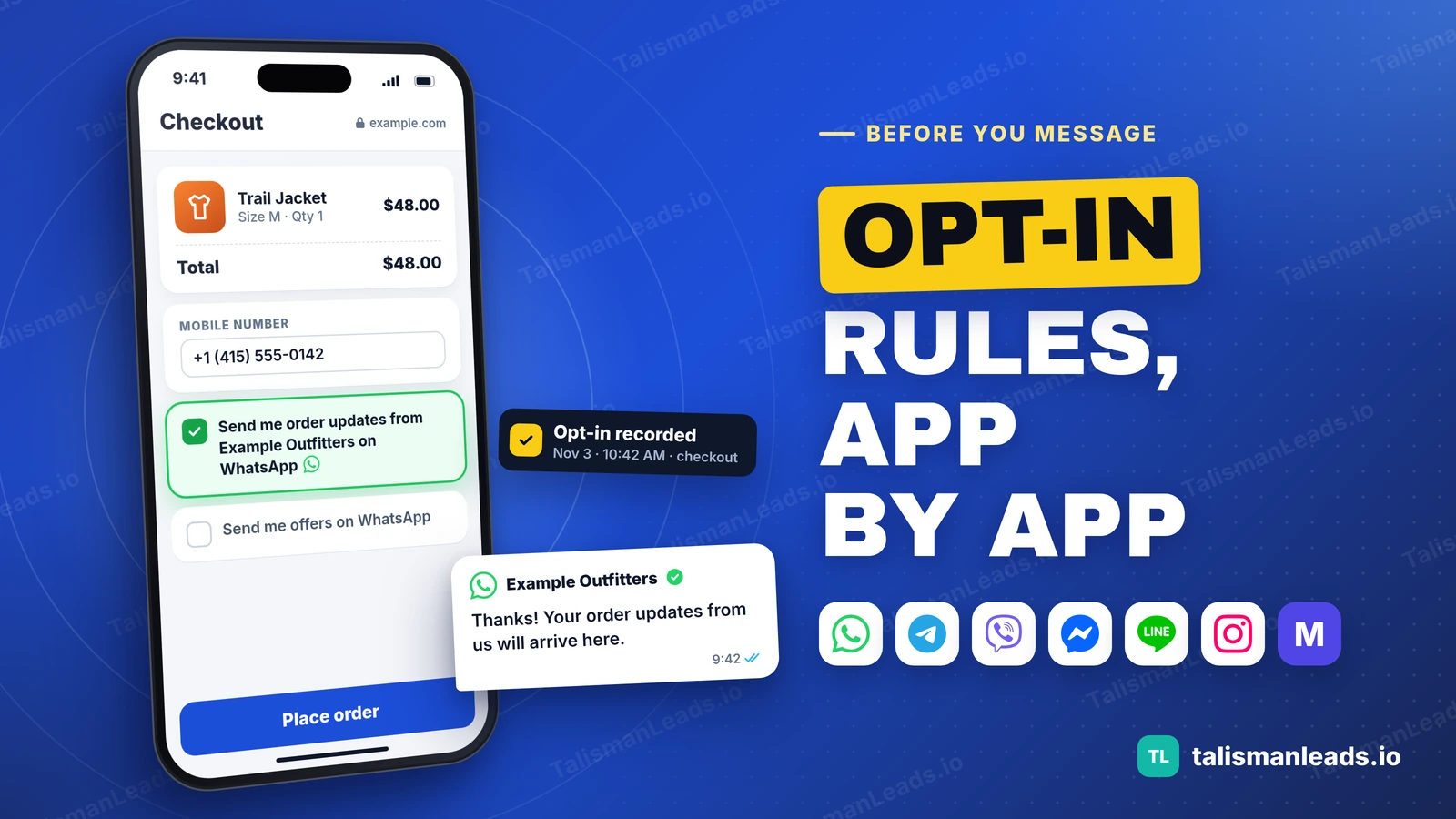
WhatsApp has two business options: the free WhatsApp Business app for a small team, and the WhatsApp Business Platform for messaging at scale through Meta or a provider. The rule for both is consent. Meta's opt-in guidelines say businesses may contact people on WhatsApp only if they gave their mobile number and opted in to hear from that business, and the opt-in must name the business. Since a November 2024 policy update, the opt-in can be collected on any channel, as long as it meets those requirements and the law.
Telegram: bots that reply, channels that broadcast#
Telegram gives businesses bots and channels. A bot can run a support desk or send updates, but Telegram's own documentation is clear: "Bots can't start conversations with users." The customer has to open the chat first, for example from a link on your website or receipt. Once they have, the bot can message them; for bulk notifications Telegram limits a bot to about 30 messages a second unless it pays for higher limits. Channels are one-way broadcasts that customers choose to join.
Signal: private chats, no business service#
Signal publishes no business service or API, and its terms of service rule out "bulk messaging, auto-messaging, and auto-dialing". A member of your team can still chat with a customer who prefers Signal, one conversation at a time, but you cannot run campaigns or automated support on it. Signal is also built for privacy: since 2024 users can set "Who can find me by my number" to "Nobody" (Signal).
Viber: business messages through partners#
Viber offers business messages, including promotional ones, sent through its approved messaging partners. Its partner guidelines require that recipients opt in before any message is sent, that the business keeps proof of that consent, and they treat anything else as spam.
Which app do your US customers use?#
National figures only go so far. The Pew Research Center found in 2025 that about a third of US adults use WhatsApp, up from 23% in 2021, and its earlier surveys found WhatsApp use much higher among Hispanic and Asian American adults. Telegram, Signal and Viber have smaller US followings, but that can change completely for a business whose customers have family or business ties abroad.
What matters is your own list. A bakery in Austin and an import business in Miami can get very different answers, so check the numbers you already have before you build a channel around one app.
How to check which apps your customers use#
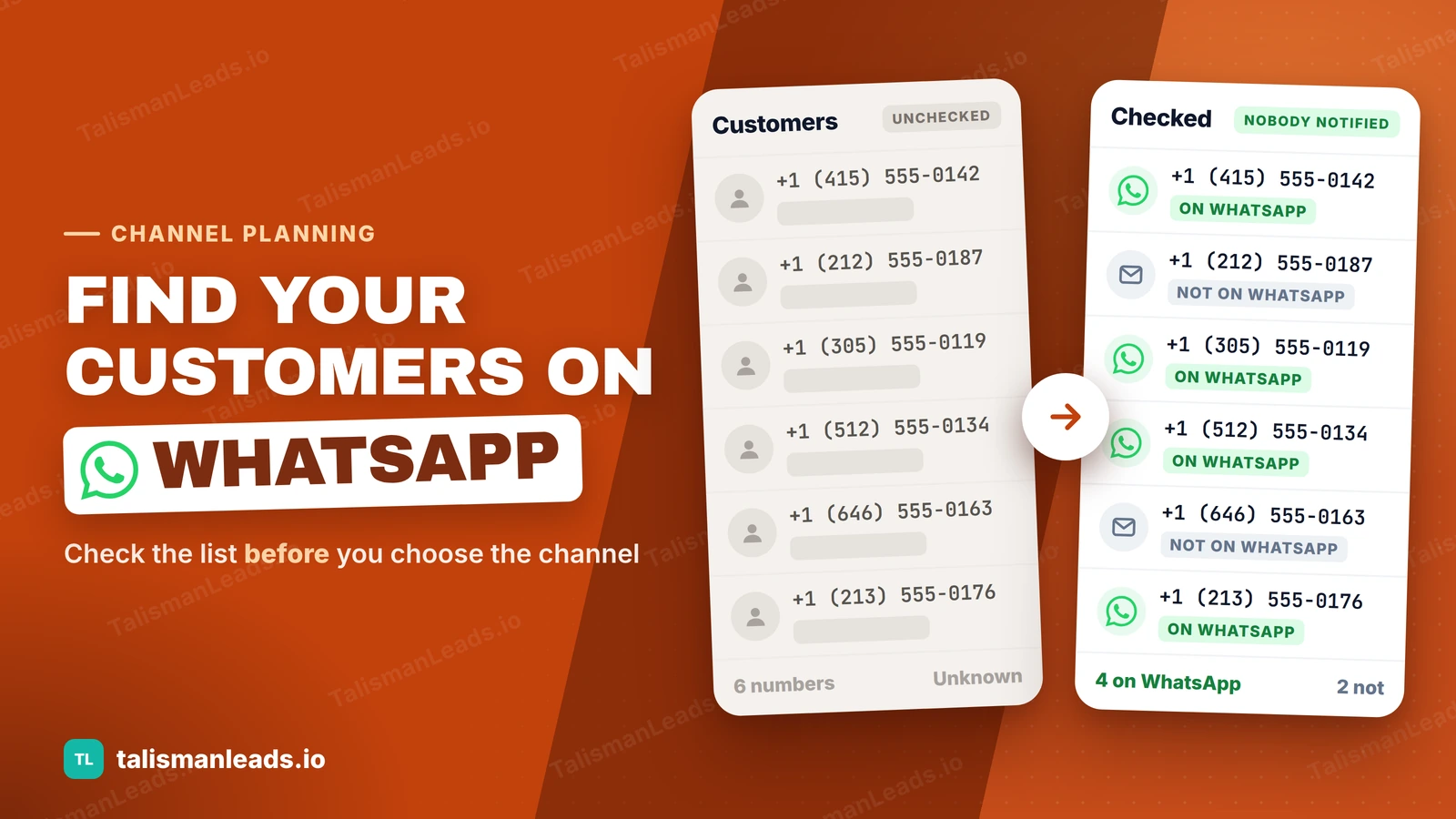
On TalismanLeads, one check per app runs on your whole customer list at once. Each number comes back registered or not registered on that app, and no message is sent to anyone.
- WhatsApp Number Checker: $0.69 per 10,000 numbers.
- Telegram Number Checker: $3.20 per 10,000 numbers.
- Signal Number Checker: $2.50 per 10,000 numbers.
- Viber Number Checker: $5.00 per 10,000 numbers.
Upload a .txt file with one number per line and the country code (+15125550142), see the exact price before you confirm, and download the results a few minutes later. Every file is billed as at least 2,000 numbers. Businesses can test the checks on their own list with a $5, 14-day free trial.
Two limits to keep in mind:
- Privacy settings. Some apps let people limit who can find them by their number, as Signal does, so a check can show a number as not registered when its owner simply chose not to be found.
- Registered is not permission. A number being on WhatsApp or Viber does not mean its owner agreed to hear from you there. Each app's rules, above, still require that they opted in.
Choosing a channel#
- Start with your customers. Pick the app that most of your list already uses.
- Match the app to the job. Updates and support at scale point to WhatsApp or a Telegram bot; one-to-one conversations can happen anywhere a customer is comfortable.
- Collect consent for the channel you choose, naming your business, and keep a record.
- Keep a fallback. Not every customer uses a messaging app. Texts reach every mobile phone: see iMessage vs RCS vs SMS for what each customer's phone can receive.
Frequently asked questions#
Which messaging app is best for customer support in the US?#
For most US businesses, WhatsApp, because the most customers use it and it has an official business platform. Check your own list first: if many of your customers use Telegram or Viber, those can be better.
Can a business use Signal?#
A person at your business can chat with a customer on Signal one conversation at a time. Signal has no business service, and its terms prohibit bulk messaging and auto-messaging, so it cannot be used for campaigns or automated support.
Can a Telegram bot message customers first?#
No. Telegram bots cannot start conversations. The customer has to open the chat with your bot first, usually from a link you give them; after that, the bot can reply and send updates.
Do I need permission to message customers on WhatsApp or Viber?#
Yes. Both require that the customer opted in to receive messages from your business, and Viber requires you to keep proof of that consent.
How can I tell which messaging apps a phone number uses?#
Run your list through a registration check for each app. It marks each number registered or not, without sending a message. Some people hide their number on some apps, so a "not registered" result is not always final.
Should I use one app or several?#
Use the one most of your customers already have, and keep SMS as the fallback for everyone else. Add a second app only if a large part of your list uses it.
Start by checking your customer list with the WhatsApp Number Checker to see how many of your customers you could reach there.
Was this helpful?