Area Codes, Number Blocks and Carriers: Who Issues a US Number
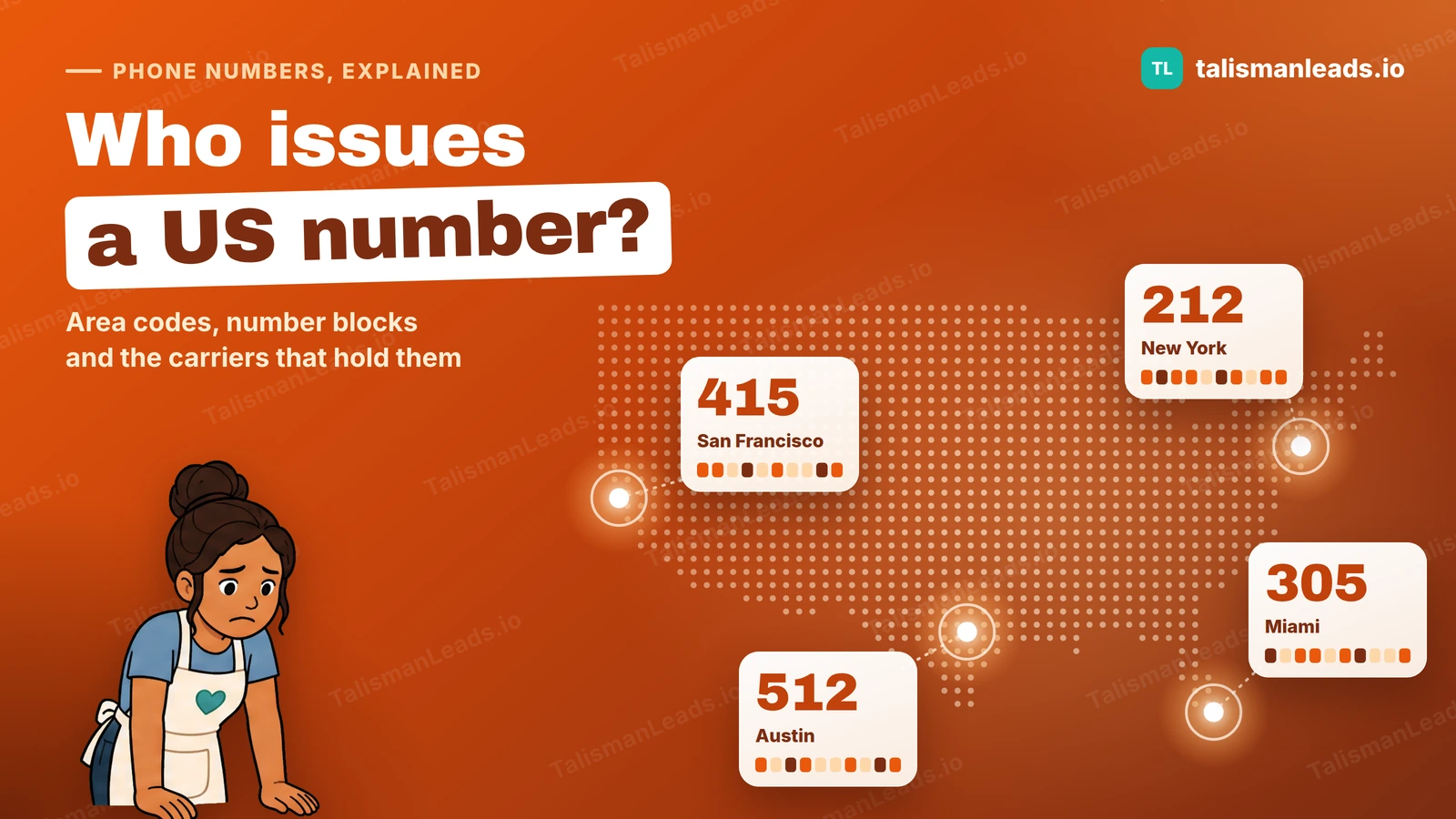
A US phone number is written as NPA-NXX-XXXX: an area code, a central office code and a line number. Carriers do not make these numbers up. Under FCC rules, the North American Numbering Plan Administrator (NANPA) gives carriers blocks of 10,000 or 1,000 numbers, and each block is tied to one local area called a rate centre. A carrier then gives single numbers from its blocks to its customers.
So the first six or seven digits tell you which company received the block and which rate centre it serves. They do not tell you who uses the number today, which carrier serves it now or where that person lives. This guide explains how numbers are given out, and what that means for the carrier and location fields on your own customer list.
The North American Numbering Plan and who runs it#
The US shares one numbering plan with Canada, Bermuda and 17 Caribbean countries. This is the North American Numbering Plan (NANP), which serves 20 countries under the country code +1, so a Jamaican number looks like a US one. (For writing +1 numbers in a form a computer accepts, see E.164 Format Explained: How to Write Any Phone Number.)
Several bodies share the work in the US:
- The FCC writes the rules, in Part 52 of its regulations.
- NANPA gives out area codes, central office codes and blocks of numbers. It must be neutral, with no ties to any phone company. Since December 2020, SomosGov, a subsidiary of Somos, Inc., has run NANPA under one FCC contract. The same contract covers number pooling and the Reassigned Numbers Database (2025 NANPA Annual Report).
- State utility commissions decide how their state gets new area codes (47 CFR 52.19).
Reading a number: NPA-NXX-XXXX#
NANPA writes the shape of both an area code and a central office code as NXX. N is a digit from 2 to 9 and X is any digit (NANPA glossary). So no area code or prefix starts with 0 or 1, and a "US number" that does is a typo.
Take +1 (512) 555-0142:
- 1 is the country code shared by all NANP countries.
- 512 is the NPA, or area code. This one covers Austin, Texas.
- 555 is the NXX: the central office code, also called the prefix or exchange. Each area code has room for about 800 of them, and each one holds 10,000 numbers.
- 0, the next digit, marks a thousands block (NPA-NXX-X): 1,000 numbers that can go to a carrier on their own.
- 0142 is the line number given to one customer.
How area codes are created: splits and overlays#
At the end of 2025, the NANP had 481 area codes in service. Of these, 451 were geographic, and 375 of those served the US and its territories (2025 NANPA Annual Report). The rest, such as the toll-free codes, are not tied to a place.
A new area code is needed when an existing one runs short of central office codes. NANPA forecasts that date from the numbers carriers report using, and starts planning relief three years ahead. The state commission then chooses one of two kinds of relief:
- A split divides the region in two, and half the customers change their area code. It is now rare.
- An overlay adds a second code over the same region. Existing numbers keep their code, and new blocks come from the new one. The FCC requires ten-digit dialing wherever there is an overlay. NANPA calls overlays the industry's preferred form of relief.
Recent examples:
- 729 over 423 in Tennessee, in service September 5, 2025 (NANPA PL-629).
- 483 over 334 in Alabama, in service February 23, 2026 (Alabama PSC).
Because of overlays, two shops on one street can have different area codes.
Central office codes and thousands-block pooling#
A carrier that needs numbers in a place asks NANPA for one of two things:
- A central office code holds 10,000 numbers.
- A thousands block holds 1,000 numbers inside a code.
Handing out numbers in blocks of 1,000 is number pooling, and it is mandatory nationwide (47 CFR 52.20). Before pooling, a small carrier that needed 300 numbers in a town tied up 10,000. Now up to ten carriers can share one code.
Every code and block is issued for a rate centre, the local area used to decide whether a call is local or long distance. That is the only geography a number carries.
In 2025, NANPA assigned 3,497 central office codes and 48,784 thousands blocks, and pooling covered 17,033 rate centres (2025 NANPA Annual Report).
Who gets number blocks: carriers, including VoIP providers#
Wireless carriers, local phone companies and interconnected VoIP providers can all apply for numbers (NANPA). Each must show it is authorized to serve the area (47 CFR 52.15).
VoIP providers have been able to get numbers directly since a 2015 FCC order. In 2023 the FCC added conditions for them, including commitments against illegal robocalls.
Of the blocks NANPA assigned in 2025:
- 67% went to wireless carriers.
- 17% went to competitive local phone companies.
- 16% went to VoIP providers.
NANPA publishes the list of codes in use, and TalismanLeads' free Bulk Carrier Lookup reads it. On November 23, 2026, the list held:
- 205,414 central office codes
- in 378 US area codes
- held under more than 2,700 company names
- with seven in ten codes pooled
Sorted by kind of holder, roughly a third of the codes belong to mobile carriers. About one in eight belong to VoIP and messaging providers such as Sinch (Inteliquent), Bandwidth and Twilio, which supply numbers to apps and texting platforms. A number in one of their blocks is very likely VoIP.
MVNOs: the brand on the bill is not the network#
The FCC describes mobile virtual network operators (MVNOs) as companies that own no network: they buy mobile service wholesale and resell it (FCC). Several well-known prepaid brands also run on, and belong to, the big three networks:
- Mint Mobile has been owned by T-Mobile since May 2024 (T-Mobile).
- Visible is part of Verizon (Verizon).
- Cricket is part of AT&T.
These brands generally hold no number blocks of their own. In NANPA's November 2026 list, not one code is held by Mint, Visible, Cricket or Google. Their customers' numbers sit in the network's blocks, or in the block a number was ported from. So a carrier lookup names the network, not the brand on the customer's bill.
Numbers outside the geographic plan: toll-free, 555 and N11#
Some numbers are not tied to any rate centre:
- Toll-free numbers use 800, 833, 844, 855, 866, 877 and 888. Code 822 is assigned but not yet open. Somos runs the toll-free registry for the FCC. Companies called RespOrgs reserve numbers in it, normally first come, first served, though Somos auctioned contested 833 numbers in 2019. A lookup shows a toll-free number as toll-free, with no location.
- The 555 code was opened up in 2016, when most of its numbers went back into the general pool. NANPA keeps 555-0100 through 555-0199 for films and advertising, which is why the examples here use them.
- N11 codes are three-digit service numbers, such as 211 for community information, 311 for city services, 711 for relay services and 911 for emergencies (NANPA). 988, the Suicide and Crisis Lifeline since July 2022, is also a three-digit code, but not an N11 code.
What this means for the carrier and location fields on your list#
When you run your own customer or sign-up list through a carrier lookup, each field comes from the plan above. Read each one for what it is:
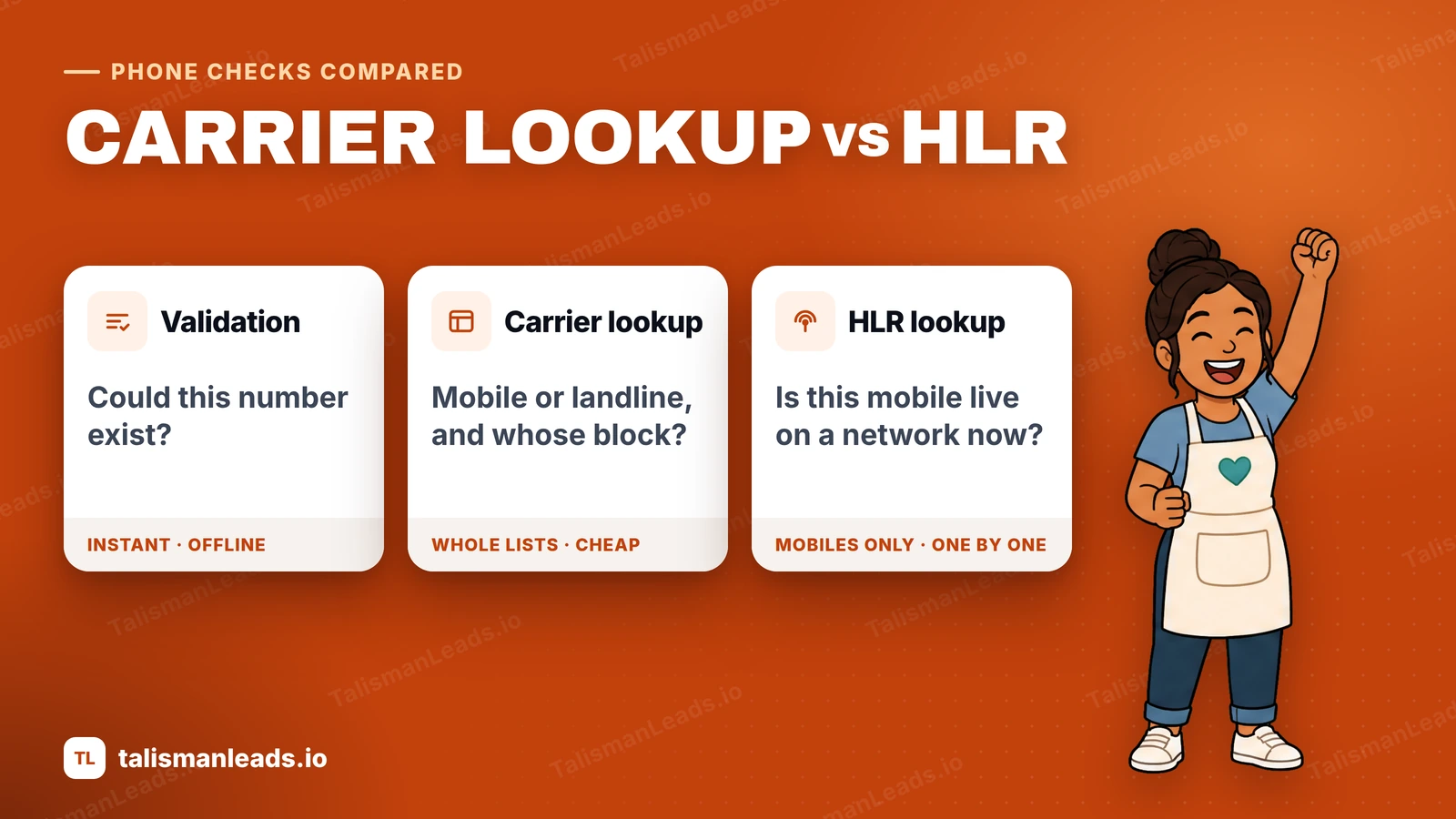
- Carrier is the block's holder. A customer keeps the number on switching carriers, so a ported number still shows the block's first holder. See Number Porting Explained: When a Customer Keeps Their Number, and Carrier Lookup vs HLR Lookup vs Number Validation for which check shows the current carrier.
- Carrier is the network, not the brand. A Mint Mobile customer shows as T-Mobile, and a Visible customer as Verizon. That is the useful answer when you are deciding whether a text can reach the number.
- Location is the place the number's range is tied to, not the person's home. A mobile number moves with its owner, and VoIP numbers can come from almost any rate centre. A customer with a 305 number may have lived in Denver for years. For a customer's state or time zone, for example to text at a sensible hour, use the address they gave you, not the area code.
The free Bulk Carrier Lookup checks up to 10,000 numbers a day, with no account, and returns each number's validity, country, line type, carrier and location. For US numbers, the carrier is the holder of the whole 10,000-number code, so a block pooled to another carrier still shows the code's holder. Nothing is sent to the numbers.
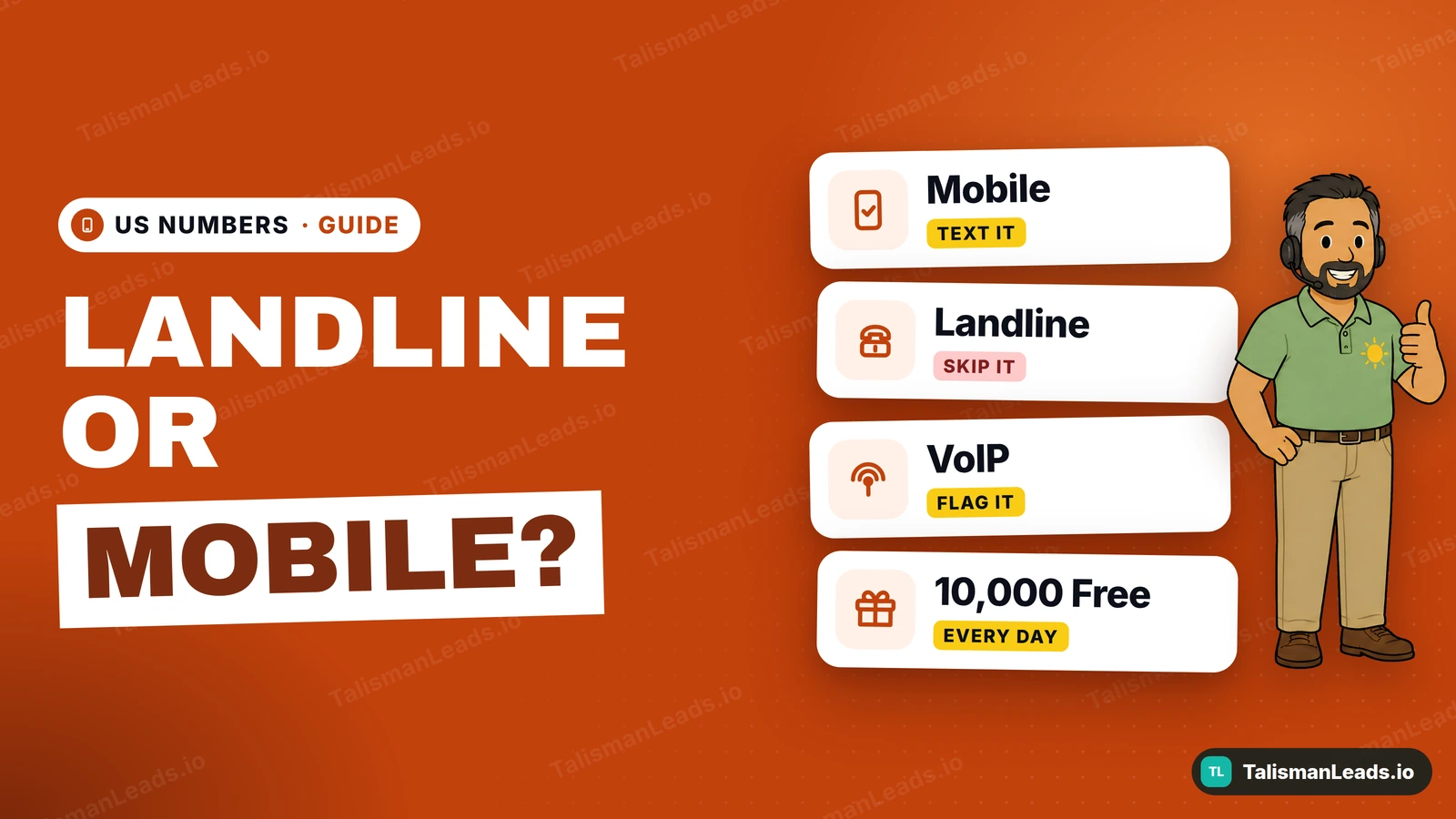
For whole lists, the Number Carrier Lookup uses the same range tables. It costs $1.20 per 10,000 numbers and shows the exact price before anything is charged. Businesses can try it with a $5, 14-day free trial. Use its line type to keep texts off landlines (see Landline or Mobile? How to Check a US Number Before You Text) and its carrier as a hint, never its location as an address.
Frequently asked questions#
What is an NPA-NXX?#
It is the first six digits of a North American phone number: the area code (NPA) and the central office code or prefix (NXX). Together they name 10,000 numbers that NANPA gave to one carrier for one rate centre. Add the next digit (NPA-NXX-X) and you have a thousands block of 1,000 numbers.
How are phone numbers assigned in the US?#
The FCC sets the rules. NANPA gives carriers, including VoIP providers, codes of 10,000 numbers or blocks of 1,000 for a specific rate centre. Each carrier then gives single numbers from its blocks to its customers.
Does an area code tell you where someone lives?#
No. It tells you the place the number's range is tied to, the area its block was issued for. People keep their mobile numbers when they move, so treat the location as where the number came from.
Why does a carrier lookup show T-Mobile for a Mint Mobile customer?#
Mint Mobile runs on T-Mobile's network and holds no number blocks of its own. A lookup reads who holds the block, so it names the network rather than the brand on the bill.
To see the carrier, line type and location behind the numbers on your own list, paste them into the free Bulk Carrier Lookup.
Was this helpful?