Landline or Mobile? How to Check a US Number Before You Text
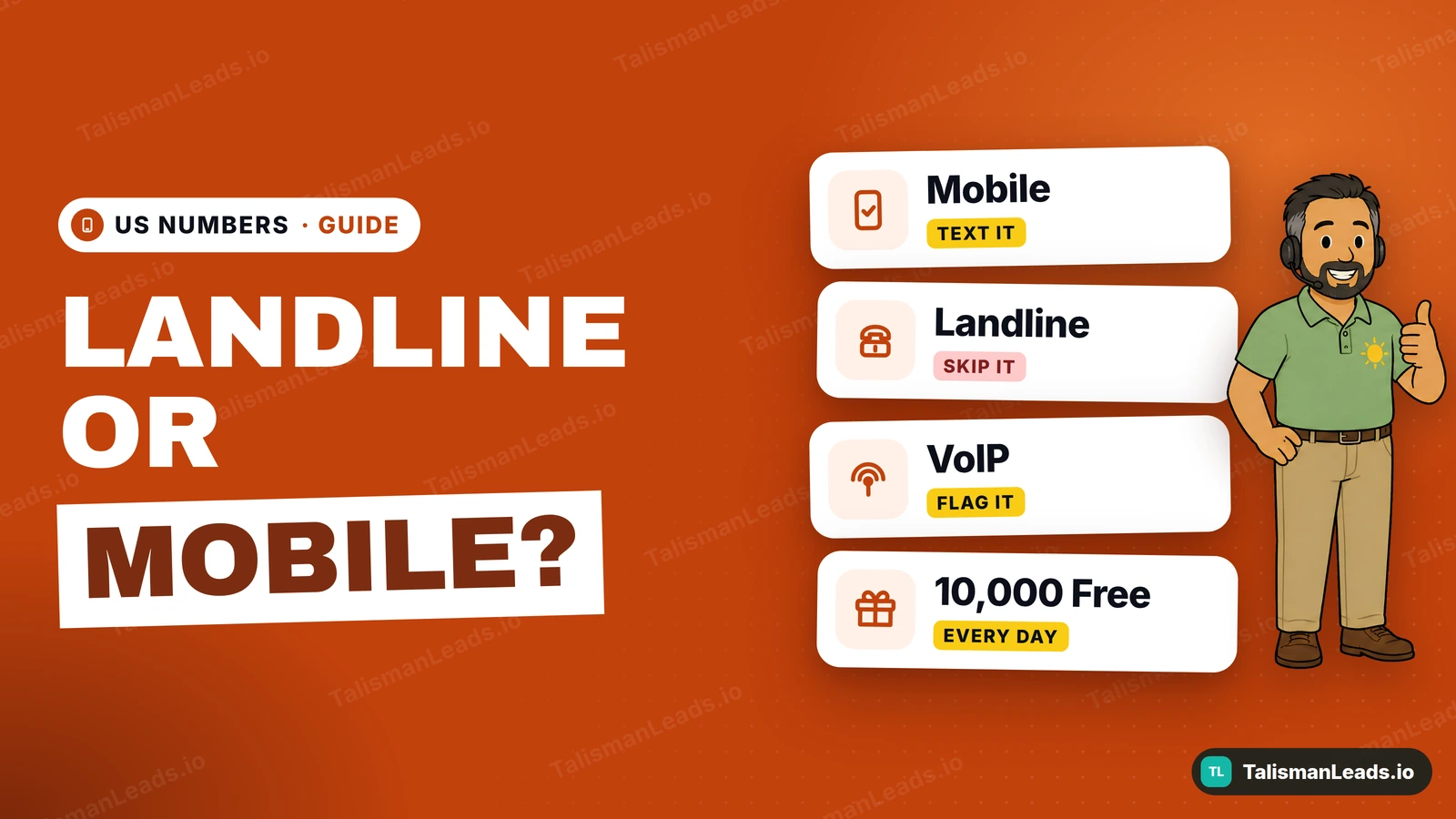
To check whether a US number is a landline or a mobile, run it through a line type lookup: it labels each number mobile, landline or VoIP in minutes, without calling or texting anyone. Do it before every SMS campaign, so you text the mobiles, move the landlines to calls or email, and look twice at the VoIP numbers.
This guide is for US businesses texting their own customers and sign-ups: what each line type means for a text message, why you cannot tell from the number itself, and how to check thousands of numbers at once, free for the first 10,000 a day.
Why the line type matters before you text#
Landlines generally cannot receive a text#
An ordinary US landline was built for voice and generally cannot receive SMS. A business text sent to one fails: SMS platforms return a "landline or unreachable" error, and some refuse to send to landlines at all. (A few carriers offer their own subscribers a service that reads a personal text aloud to a landline, but that is not how business messages are delivered.)
The exception is a business landline or toll-free number that its owner has had "text-enabled" through a messaging provider. Those are rare on a customer list.
A failed text still costs money#
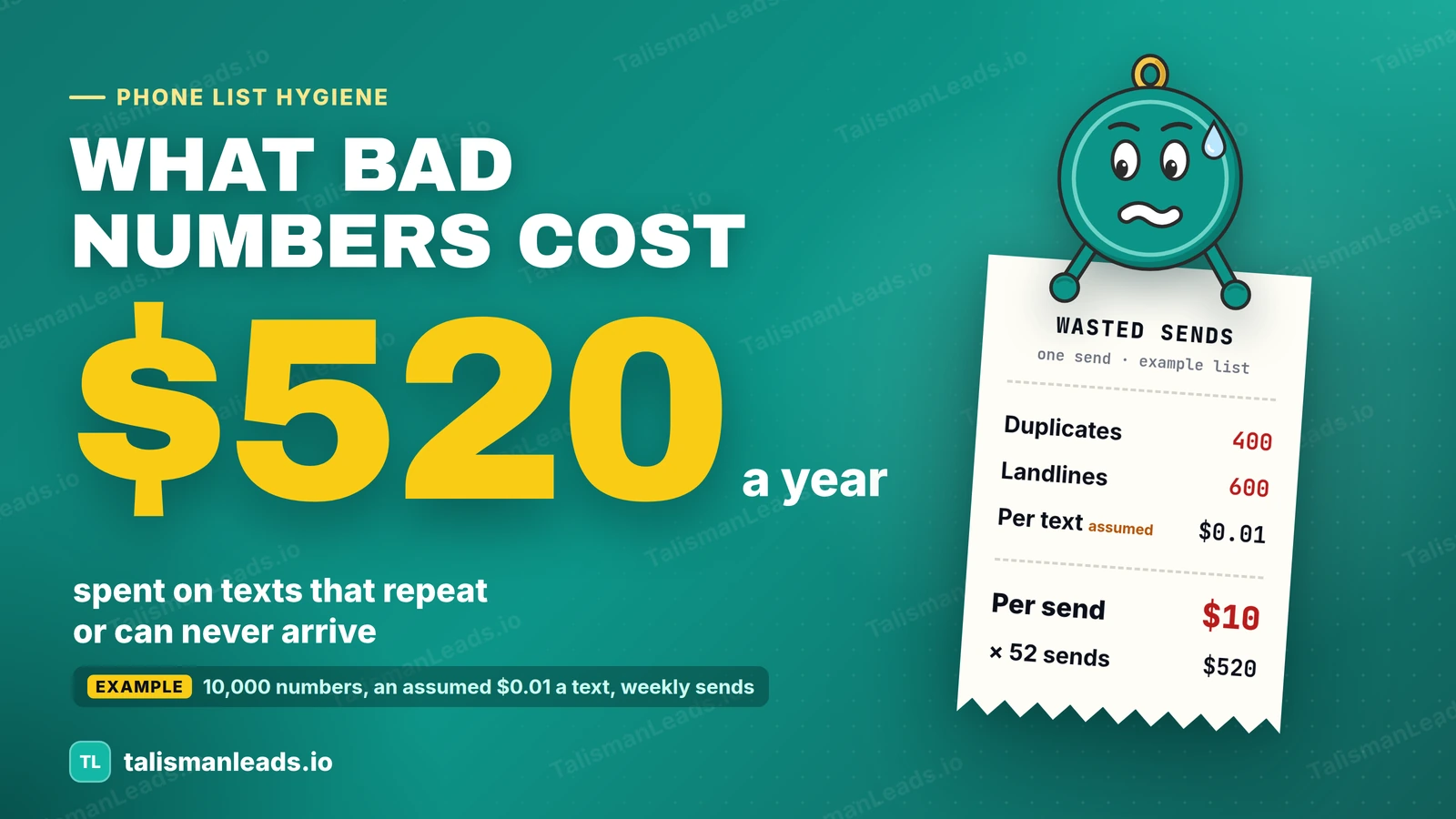
SMS is generally billed when a message is sent, not when it arrives. Amazon's messaging service, for example, notes that SMS charges for requested messages, and some platforms add a fee for every message that fails. Every landline on your list is a message you pay for that nobody reads, and an error in your delivery report.
Mobile and landline numbers follow different rules#
US law treats texts as calls, and automated calls and texts to cell phone numbers need the recipient's prior consent; marketing messages sent that way need written consent (47 CFR 64.1200). Landlines are not exempt from the rules either. Knowing which of your numbers are mobile helps you keep the right consent records for the right list. This is not legal advice: check the rules that apply to your campaigns with your own lawyer.
Landline, mobile or VoIP: what each one means#
Mobile. A cell phone on a wireless carrier such as Verizon, T-Mobile or AT&T. It can receive texts, and it is the line type an SMS campaign is built for.
Landline. A fixed line at a home or office. It generally cannot receive texts; reach it by phone call or email instead.
VoIP. A number that runs over the internet rather than the traditional phone network. "Fixed" VoIP is tied to an address, like a cable company's home phone or an office phone system. "Non-fixed" VoIP comes from an app or website and works anywhere, and some of it is free to sign up for. Many VoIP numbers can receive texts, but fraud teams treat a non-fixed VoIP number on a new sign-up as a reason to look closer.
You may also see toll-free (800, 888 and the like) and premium rate numbers. A toll-free number on a customer list is almost always a company's main line, not a person's phone.
You cannot tell from the number itself#
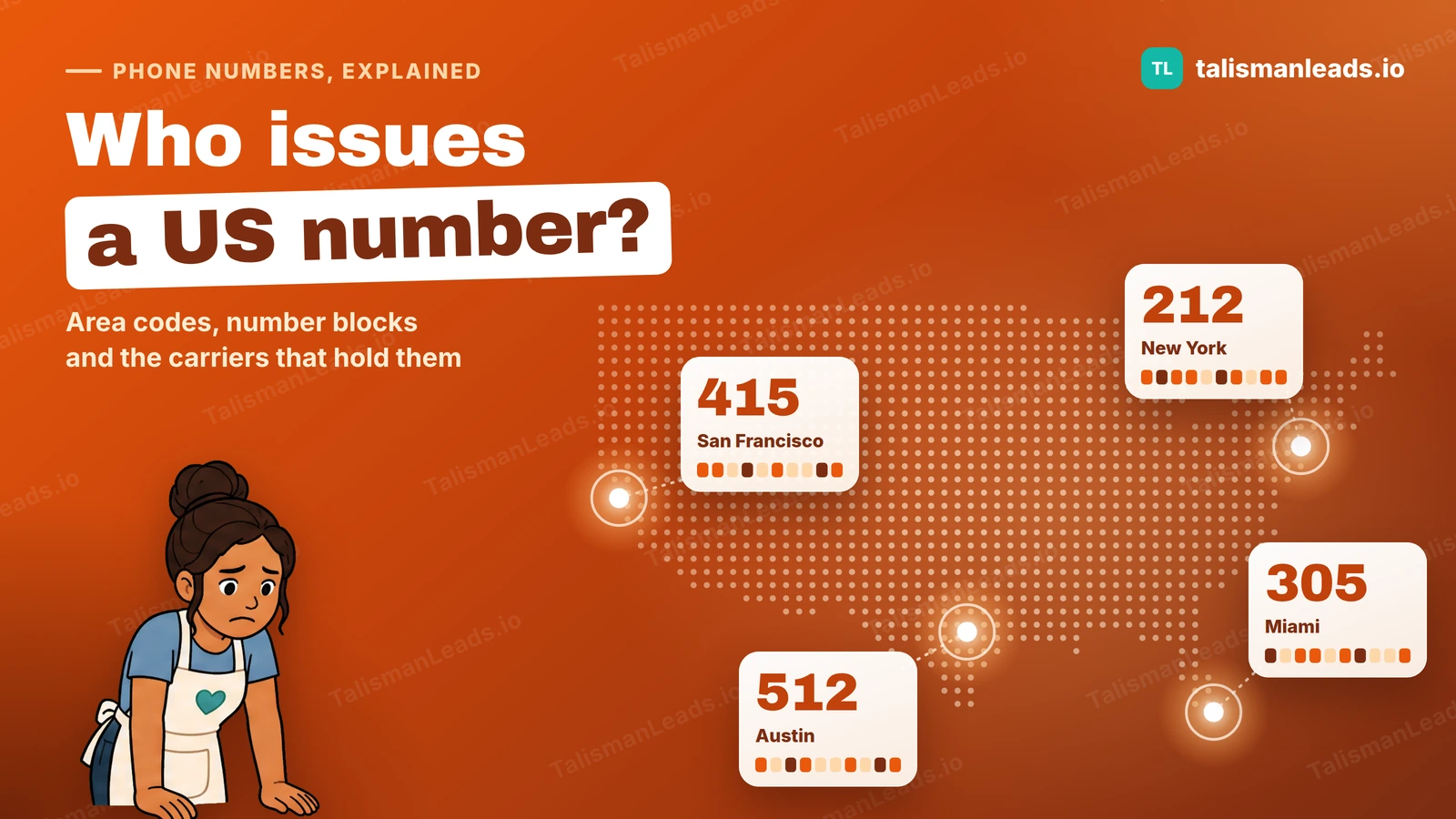
In much of the world, mobile numbers start with their own prefixes. Not in the US: cell phones and landlines share the same area codes and exchanges. Google's own phone number library, used by countless apps, labels US numbers simply as "fixed line or mobile" because the digits alone do not say which.
Numbers also move: customers can keep their number when they change carriers, even from a landline to a cell phone or a VoIP service (number porting), so an area code tells you where a number was first issued, not what kind of phone answers it today.
Why your list holds more landlines than you think#
Customers type whatever number they think of first. On a checkout or sign-up form, that is often a home or office number, especially on older lists and on business-to-business forms, where people give the front desk.
Lists also go stale while they sit. The FCC estimated in 2018 that about 35 million US numbers are disconnected and made available for reassignment each year. The wireless industry's messaging guidelines from CTIA advise senders to remove deactivated numbers from their opt-in lists regularly. A list that was clean last year is not clean today: check it again before each large campaign (why phone lists go stale).
How a line type lookup works#
The lookup on TalismanLeads matches each number against its country's numbering plan: the published tables that record which carrier was given each block of numbers, and whether that block is for mobile, landline or VoIP service. For each number it returns:
- the line type: mobile, landline, VoIP, toll-free or premium rate
- the carrier that holds the number's block
- the region and city
- whether the number is valid, and its country
It is passive. Nothing is sent to the numbers: nobody on your list is called, texted or notified.
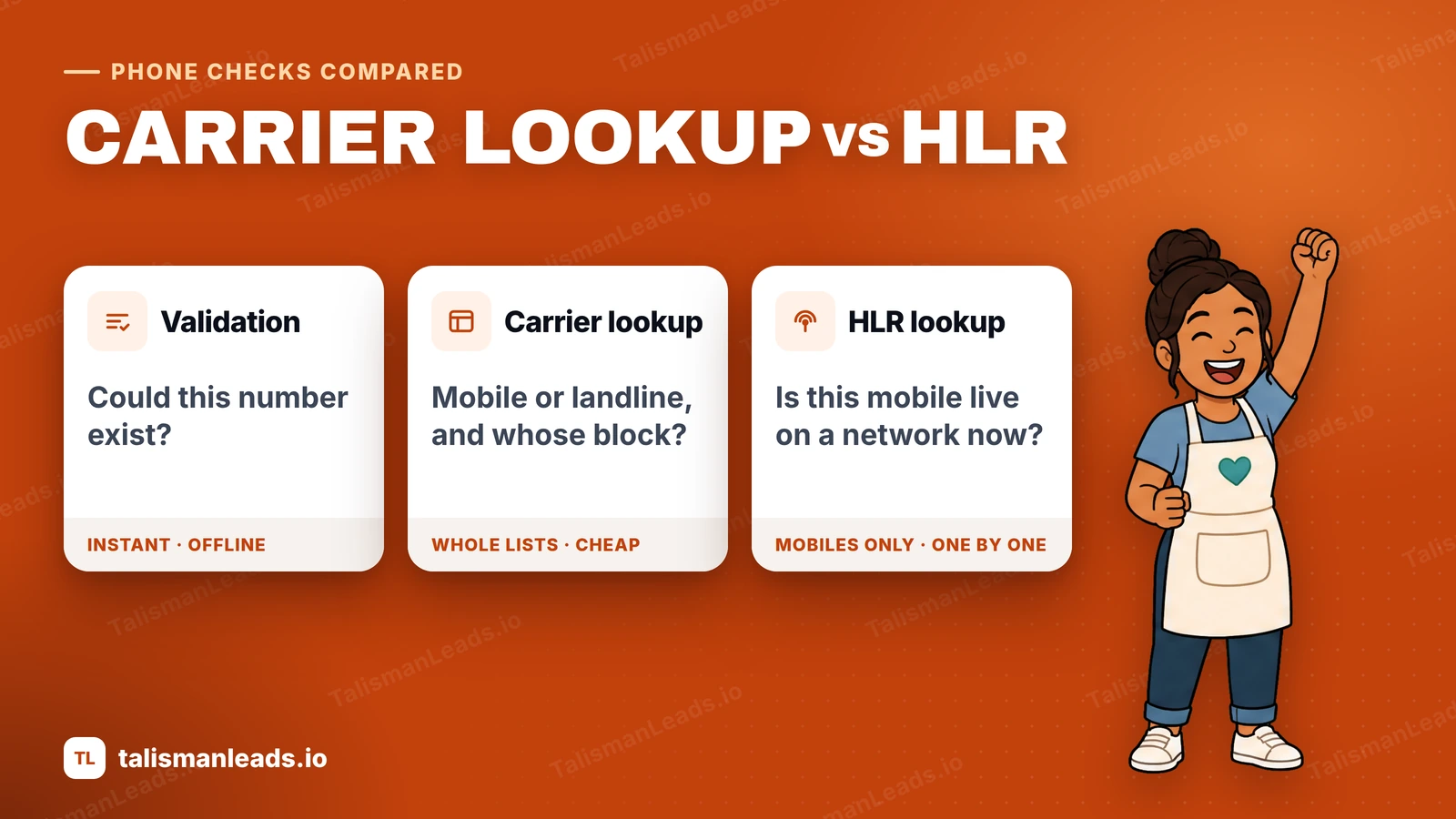
It reliably flags invalid numbers, toll-free numbers and numbers in landline blocks, where most failed texts come from, but a number that moved may still show its original carrier, and no lookup of this kind proves a number is still in use. Carrier Lookup vs HLR Lookup vs Number Validation explains what each kind of check can and cannot tell you.
How to check line types on TalismanLeads#
Up to 10,000 numbers a day: the free Bulk Carrier Lookup#
- Open the free Bulk Carrier Lookup. No account or card is needed.
- Paste your numbers one per line with the country code, in E.164 format such as +15125550142, or upload a .txt or .csv file. From a CSV, the column named phone or number is read.
- Run the lookup. Each number comes back with its country, line type, carrier, location and whether it is valid.
- Filter by line type, keep the mobiles, and download the rows you want as a CSV that opens in Excel or Google Sheets.
Every visitor gets 10,000 free lookups a day, up to 20,000 in one run within that allowance.
Bigger lists: the Number Carrier Lookup#
For a list larger than the daily allowance, the paid Number Carrier Lookup has no daily limit:
- Save the numbers as a plain .txt file, one per line, with the country code. Put one country in each file.
- Choose the Phone Carrier check and upload the file. The exact price shows before anything is charged.
- Download the result file in minutes: line type, carrier, region and city for every number, with a summary of your list.
It costs $1.20 per 10,000 numbers, so a 50,000-number list costs $6.00. Each file is billed as at least 2,000 numbers, top-ups start at $5, and credit never expires. Businesses can test it on their own data with a $5, 14-day free trial.
What to do with the results#
- Mobile: text as planned, with the consent your campaign needs.
- Landline: move the customer to a calling or email list instead of deleting them.
- VoIP: keep for texting if the customer gave it to you and has replied before; on new sign-ups, check further.
- Toll-free and premium rate: take off the SMS list unless you know the number is text-enabled.
- Invalid: remove. If many come from one form, fix the form: ask for the country code and check the number as it is typed.
Then send a small batch first, and compare its delivery rate with your last campaign.
Frequently asked questions#
Can you send a text message to a landline?#
Generally not. A business text to an ordinary US landline fails with an error. Some carriers read personal texts aloud to landlines for their own subscribers, but business messages are not delivered that way. Only a landline that has been text-enabled through a messaging provider can receive them.
How can I tell if a phone number is a landline or a cell phone?#
Run it through a line type lookup. You cannot tell from the area code, because US landlines and cell phones share the same codes. The free Bulk Carrier Lookup on TalismanLeads checks up to 10,000 numbers a day and labels each one mobile, landline, VoIP, toll-free or premium rate.
How do I know if a number is VoIP?#
The same lookup returns VoIP as a line type. A VoIP number is not a problem in itself, and many can receive texts, but on a new sign-up it is worth checking further.
Is a line type lookup always right?#
It is right about the block a number belongs to. Because US numbers can move between carriers, and from a landline to a cell phone, a small share of moved numbers show their original carrier or type. It is very reliable for removing invalid numbers and clear landline blocks.
Does the lookup contact the numbers?#
No. It reads numbering tables only. Nobody is called, texted or notified.
How much does it cost to check line types in bulk?#
The first 10,000 numbers a day are free with the Bulk Carrier Lookup. Beyond that, the Number Carrier Lookup costs $1.20 per 10,000 numbers.
Start with today's free lookups on the Bulk Carrier Lookup, and send your next campaign only to the numbers that can receive it.
Was this helpful?