Why Phone Lists Go Stale: Reassigned and Ported Numbers
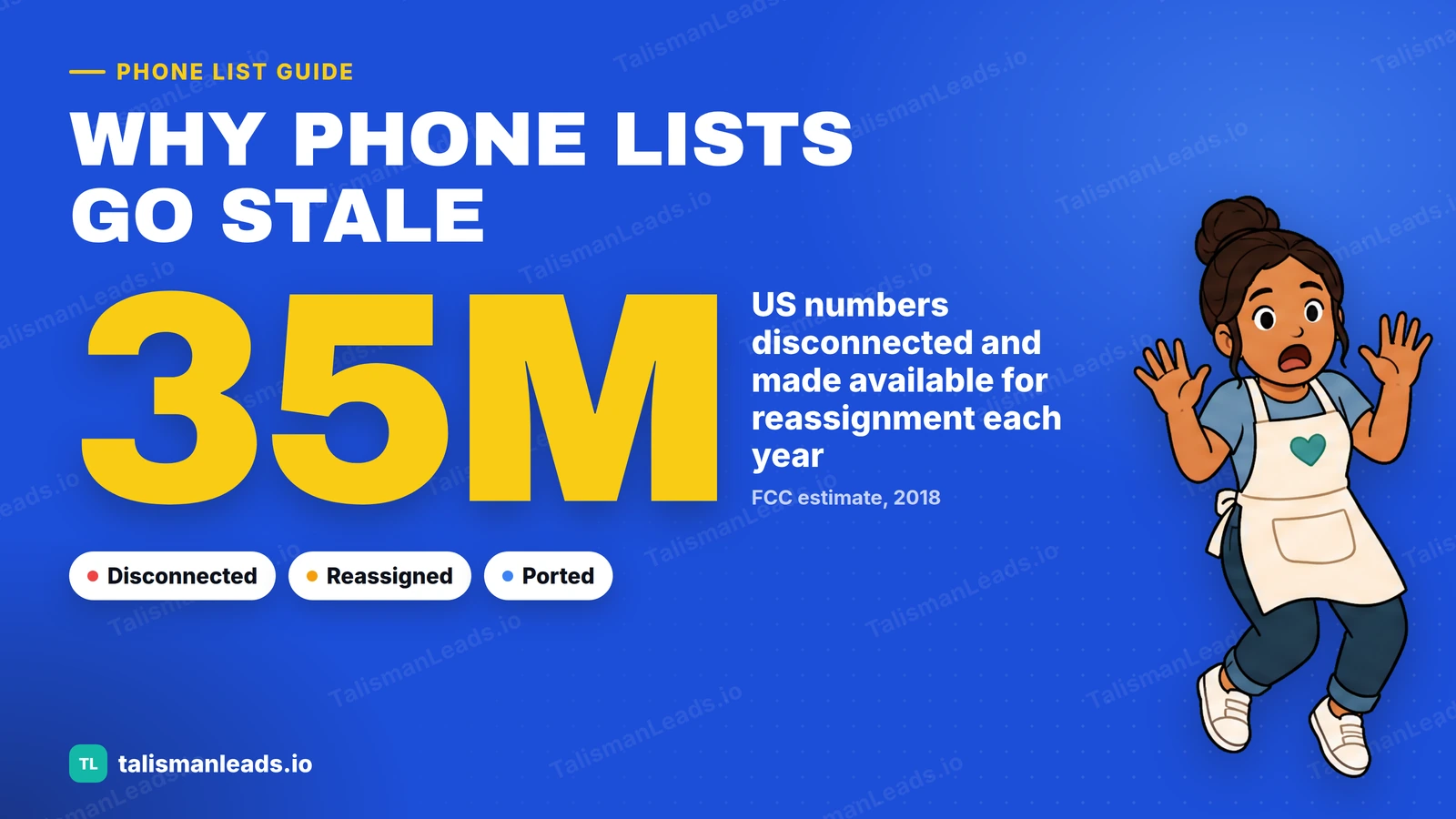
A phone list goes stale because the numbers on it keep changing hands. Numbers are disconnected, held for a few weeks, then given to someone new; others move to a new carrier or from a landline to a cell phone. A list that was clean last year can now reach strangers who never agreed to hear from you. The fix is a short routine before every reuse: remove opt-outs, re-check every number, check for reassignment, and keep a record of when you did.
This guide is for businesses reusing their own customer and sign-up lists. It explains what happens to a phone number over time, what a stale number costs you, and how to re-check a list before you send.
Three things that happen to phone numbers#
Numbers are disconnected#
People cancel plans, switch to a new number, move away or simply stop paying. The FCC estimated in 2018 that about 35 million US numbers are disconnected and made available for reassignment each year. Every one of them may still sit on someone's marketing list.
Disconnected numbers are given to someone new#
A disconnected number is not retired. Carriers hold it for an "aging" period and then hand it to a new customer. Federal rules set that period at no less than 45 and no more than 90 days for a number that belonged to a home customer, and between 45 days and a year for a business number. So a number that stopped working in the spring can belong to a stranger by the summer.
Numbers move between carriers and line types#
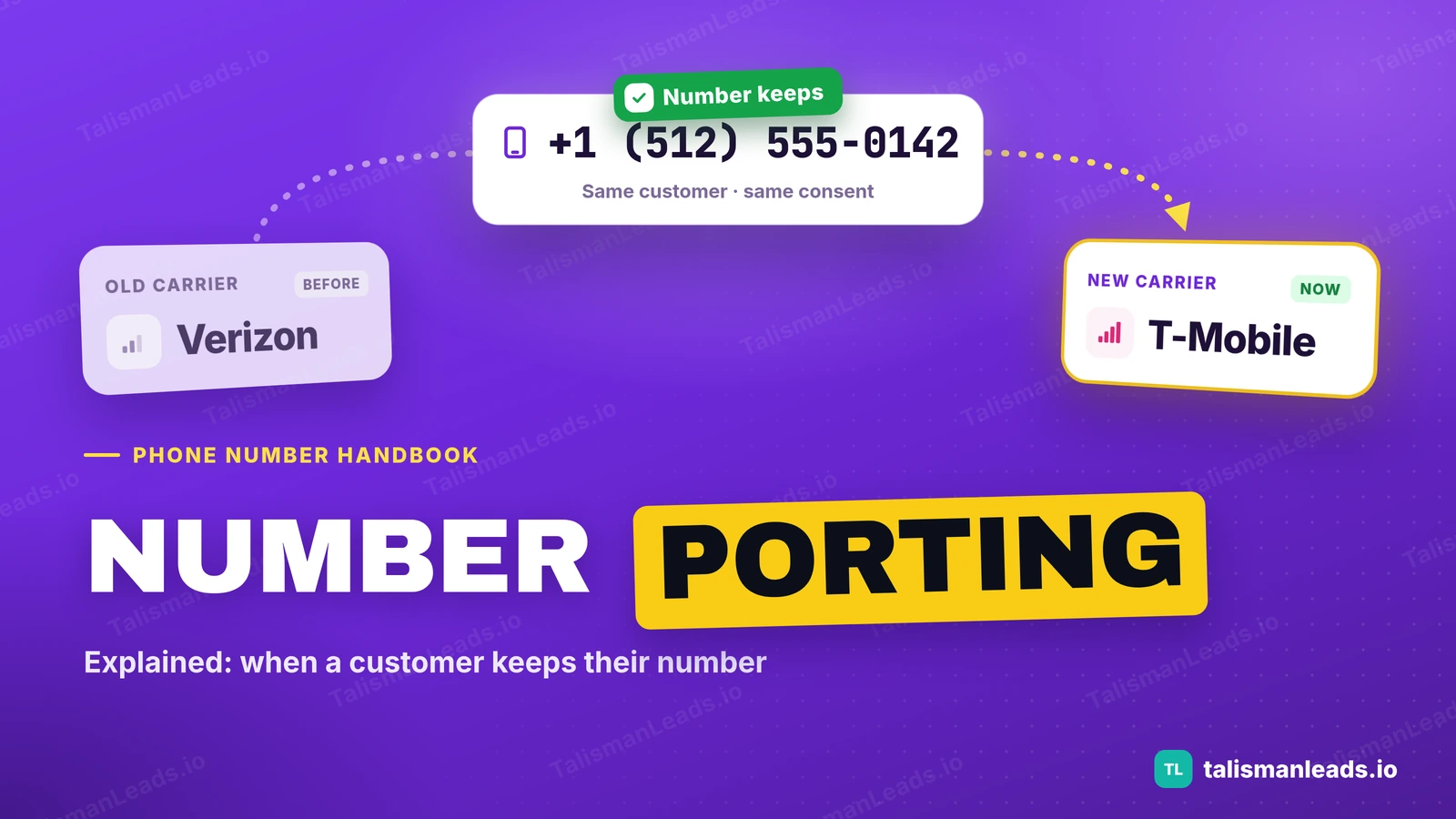
People can keep their number when they change carriers, and that includes moving a landline number to a cell phone or to an internet phone service. The number on your list stays the same, but the carrier behind it, and sometimes the kind of line, does not. Number Porting Explained covers how a port works.
What a stale number costs you#
- Texts to the wrong person. Consent belongs to the person who gave it, not to the number. A text to a reassigned number reaches someone who never opted in, which is the situation US telemarketing rules are written to prevent.
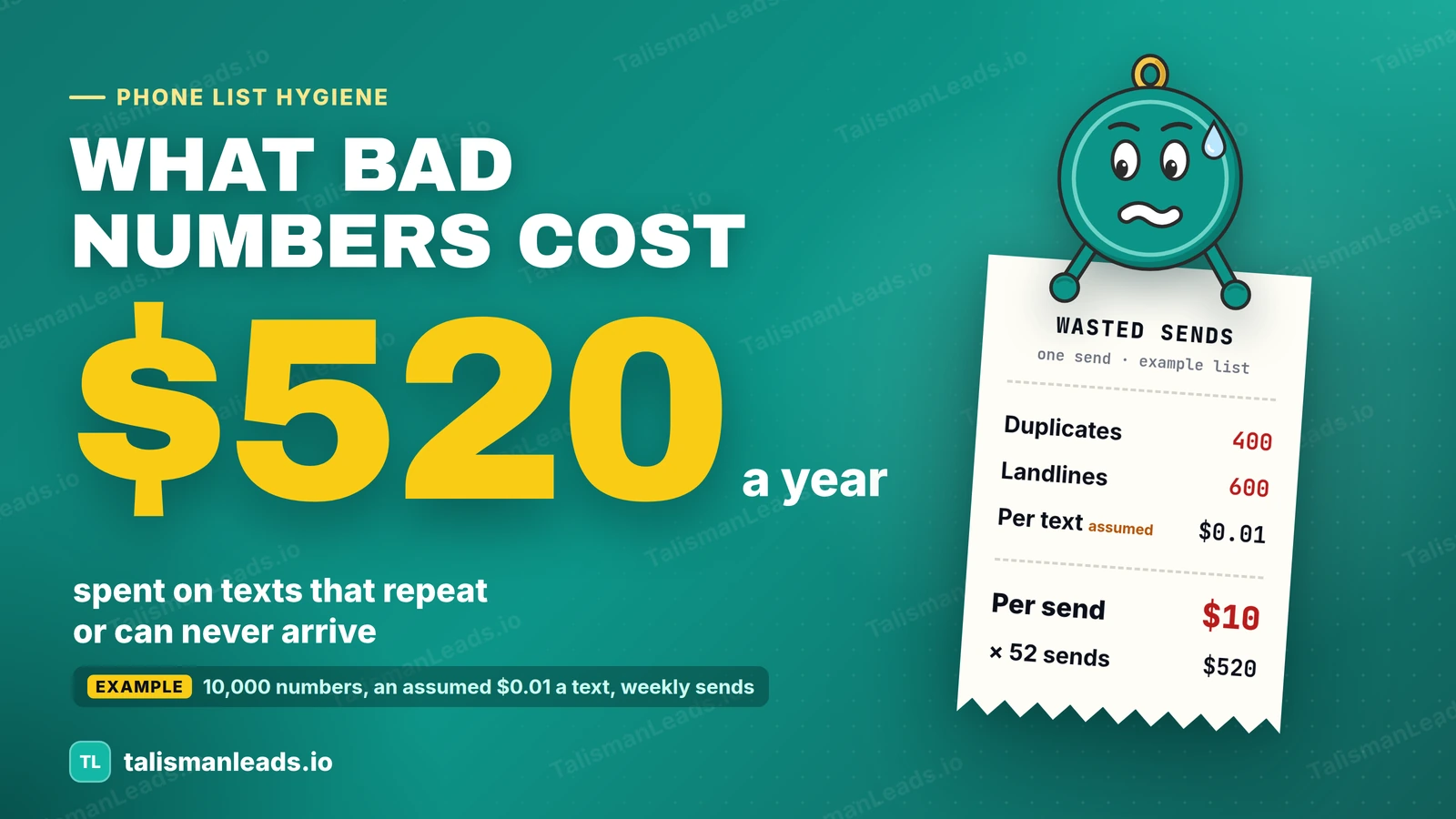
- Messages that fail but still cost money. A disconnected number, or a number that became a landline, cannot take your text, yet SMS is generally billed when it is sent. (See how to check whether a number is a landline or mobile.)
- Figures you cannot trust. Delivery rates, reply rates and the size of your audience all look worse, or better, than they are.
The wireless industry's messaging guidelines from CTIA ask senders to remove deactivated numbers from their opt-in lists regularly, daily if possible.
How to re-check a phone list before you reuse it#
1. Remove opt-outs first#
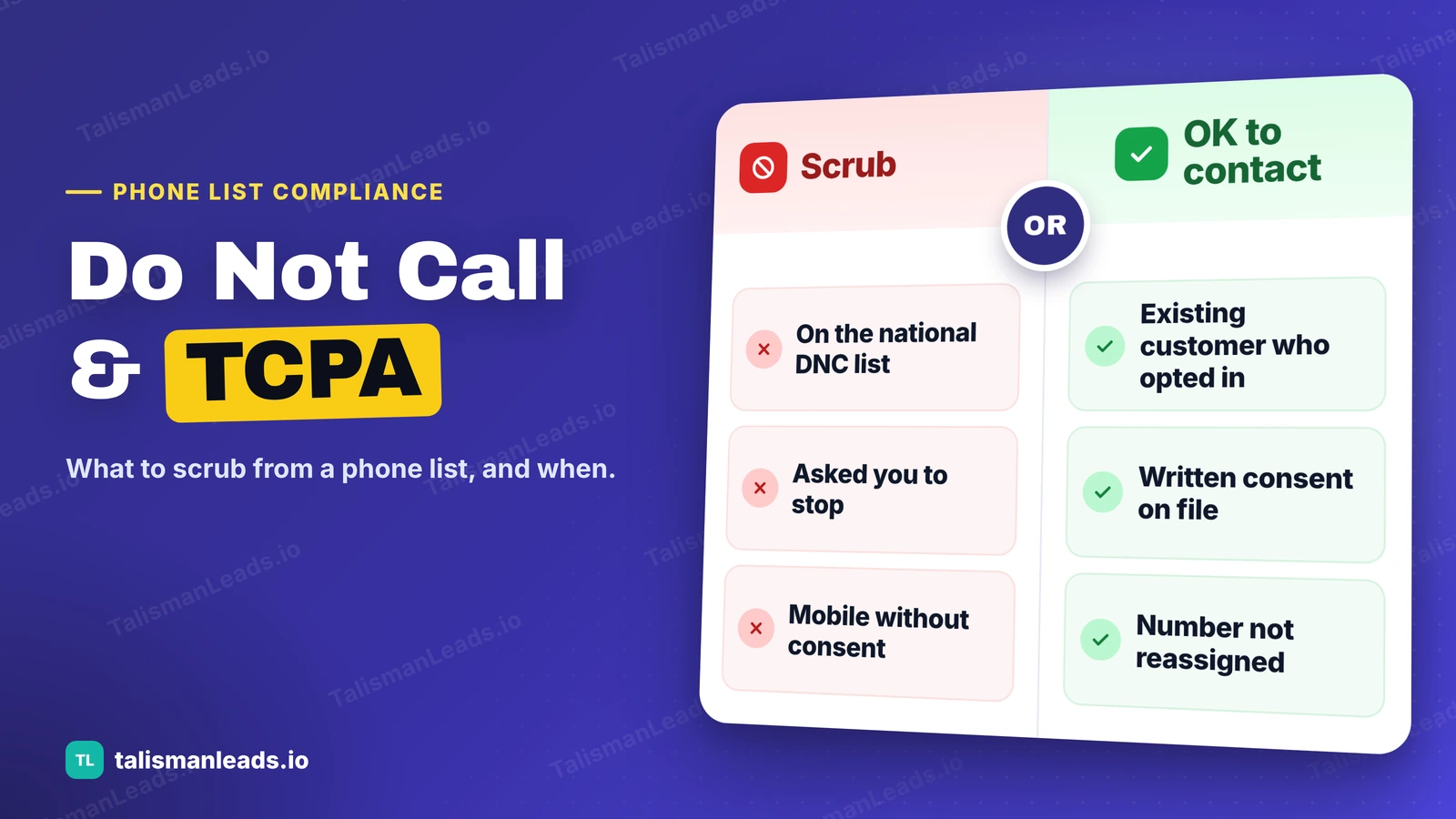
Before anything else, remove everyone who asked you to stop, by any wording, and everyone on your do-not-call lists. No check makes an opted-out number usable again.
2. Clean the format and remove repeats#
Put every number in one format with its country code (+15125550142), and remove invalid entries and duplicates. With a free TalismanLeads account, the Number Cleaner in Free Tools does this for up to 200,000 lines at a time.
3. Check validity and line type again#
A number that was a mobile when you collected it may not be one now. The free Bulk Carrier Lookup checks 10,000 numbers a day without an account, and the Number Carrier Lookup checks whole files for $1.20 per 10,000 numbers. Each number comes back valid or invalid, with its line type, carrier and location.
A lookup like this reads numbering-plan tables, so it reliably finds invalid, toll-free and landline-block numbers, but a ported number may still show its original carrier, and a disconnected or reassigned number usually still looks valid: that is what step 4 is for. Carrier Lookup vs HLR Lookup vs Number Validation explains what each kind of check can and cannot tell you.
4. Check for reassigned numbers#
To find numbers that were disconnected since your customer gave them to you, use the FCC's Reassigned Numbers Database. Phone companies report every number's latest permanent disconnection to it each month, and you can ask whether a number was disconnected after a given date, such as the day your customer opted in. A business that checks it and gets a "no" may have a defense if a number later turns out to have been reassigned, but only with valid consent from the earlier owner (Do Not Call and TCPA for Phone Lists covers the rules around it). This is not legal advice: ask your lawyer how the rules apply to you. Some messaging providers also offer this check through their own tools.
5. Apply your provider's deactivation data#
Many SMS providers receive deactivation reports from carriers and can drop those numbers for you. Ask yours, and switch it on.
6. Send a small batch first, and keep a record#
Send to a small part of the list and watch the failures. Remove numbers that fail permanently. Note the date you checked each number, so you know how old each check is the next time you reuse the list.
How often should you re-check a phone list?#
Before every large campaign, and whenever a list has sat unused for more than a month or two. The aging rules mean a number can pass to a new person about six weeks after it is disconnected, and the Reassigned Numbers Database is updated monthly, so a check from last quarter says little about today. Check new sign-ups as they arrive, too, so bad numbers never reach the list. For email addresses, the same idea applies: see how to clean an email list.
Frequently asked questions#
How often are phone numbers reassigned?#
Constantly. The FCC estimated in 2018 that about 35 million US numbers are disconnected and made available for reassignment each year. There is no reliable public figure for how many of them reach a new owner within a given time.
How long before a disconnected number goes to someone else?#
At least 45 days. Federal rules require a number to be held for 45 to 90 days if it belonged to a home customer, and 45 days to a year if it belonged to a business, before it can be given out again.
How can I tell if a phone number was reassigned?#
Check it against the FCC's Reassigned Numbers Database, which shows whether a number was permanently disconnected after a date you give, such as the day the customer opted in. A carrier lookup cannot tell you this.
Does a carrier lookup show whether a number is still in use?#
No. It shows whether a number is valid, its line type, the carrier its block belongs to and its location. A number that was disconnected or given to someone new can still look valid.
What happens to a number when it is ported?#
The number stays the same and moves to a new carrier, sometimes from a landline to a cell phone. Lookups based on numbering-plan data may still show the original carrier.
How often should I clean my phone list?#
Before every large campaign, and whenever the list has been unused for more than a month or two. Remove opt-outs first, then re-check the numbers and look for reassignments.
Start with today's free lookups on the Bulk Carrier Lookup, then check the numbers that remain against the Reassigned Numbers Database before you send.
Was this helpful?