What Bad Numbers Cost: How to Measure Phone List Quality
A phone list's quality comes down to six numbers you can measure: the share of invalid numbers, duplicates, landlines on a texting list, numbers that are not on the channel you send through, opt-outs still on the list, and the delivery rate your SMS provider reports after a send. Ignored, each one costs money: texts you pay for that cannot land, carrier filtering, replies to answer, and legal risk. The first four take minutes to measure before a campaign, mostly with free tools.
This guide is for businesses that text or call their own customers and sign-ups, with a worked example you can redo with your own numbers.
The six measures of a phone list#
The first four you measure on the list before sending; the last two come from your records and your provider.
1. Share of invalid numbers#
These are lines that cannot be a phone number in the country's numbering plan: a digit missing, no area code, an area code that does not exist. The free Number Cleaner in Free Tools (with a free account, up to 200,000 lines per run) marks each one "Not a valid number" in a removed-lines file.
2. Share of duplicates#
Count duplicates after every number is in one format, not before. In a CRM export, (415) 555-0142 and 415.555.0142 look like two contacts, so a spreadsheet's "remove duplicates" keeps both and that customer gets two texts. The Number Cleaner rewrites every line in E.164 (+14155550142) first and then compares, so the "Duplicate" count in its removed-lines file is the real one.
3. Share of landlines on a texting list#
An ordinary text to a landline generally does not arrive, and US landlines and mobiles share the same number patterns, so the Number Cleaner's "Keep mobile numbers only" option removes no US number. A line-type lookup is needed. The free Bulk Carrier Lookup checks 10,000 numbers a day with no account and returns each number's line type (mobile, landline, VoIP and others), carrier, location and whether it is valid. Whole files go to the paid Number Carrier Lookup. More in Landline or Mobile? How to Check a US Number Before You Text.
4. Share not on the channel you send through#
If the campaign goes out on RCS, iMessage or WhatsApp rather than plain SMS, the question is how many numbers can receive it there. The RCS Number Checker marks each number RCS-capable or SMS-only, the iMessage Number Checker marks it registered or not, and the WhatsApp Number Checker marks it on WhatsApp or not. None of them sends anything to the numbers. iMessage vs RCS vs SMS explains what each channel needs.
5. Opt-outs still on the list#
This one is not a share to keep low. It has to be zero. Anyone who asked you to stop, by replying STOP or in any other reasonable way, must be honoured within 10 business days under the FCC's rules (47 CFR 64.1200(a)(10)). Compare the list with your own do-not-contact list before every send. Track the opt-out rate of each campaign too (opt-outs ÷ messages delivered). Twilio's Health Score treats under 1% as healthy and says over 3% may lead to carrier filtering.
6. Delivery rate, from your SMS provider#
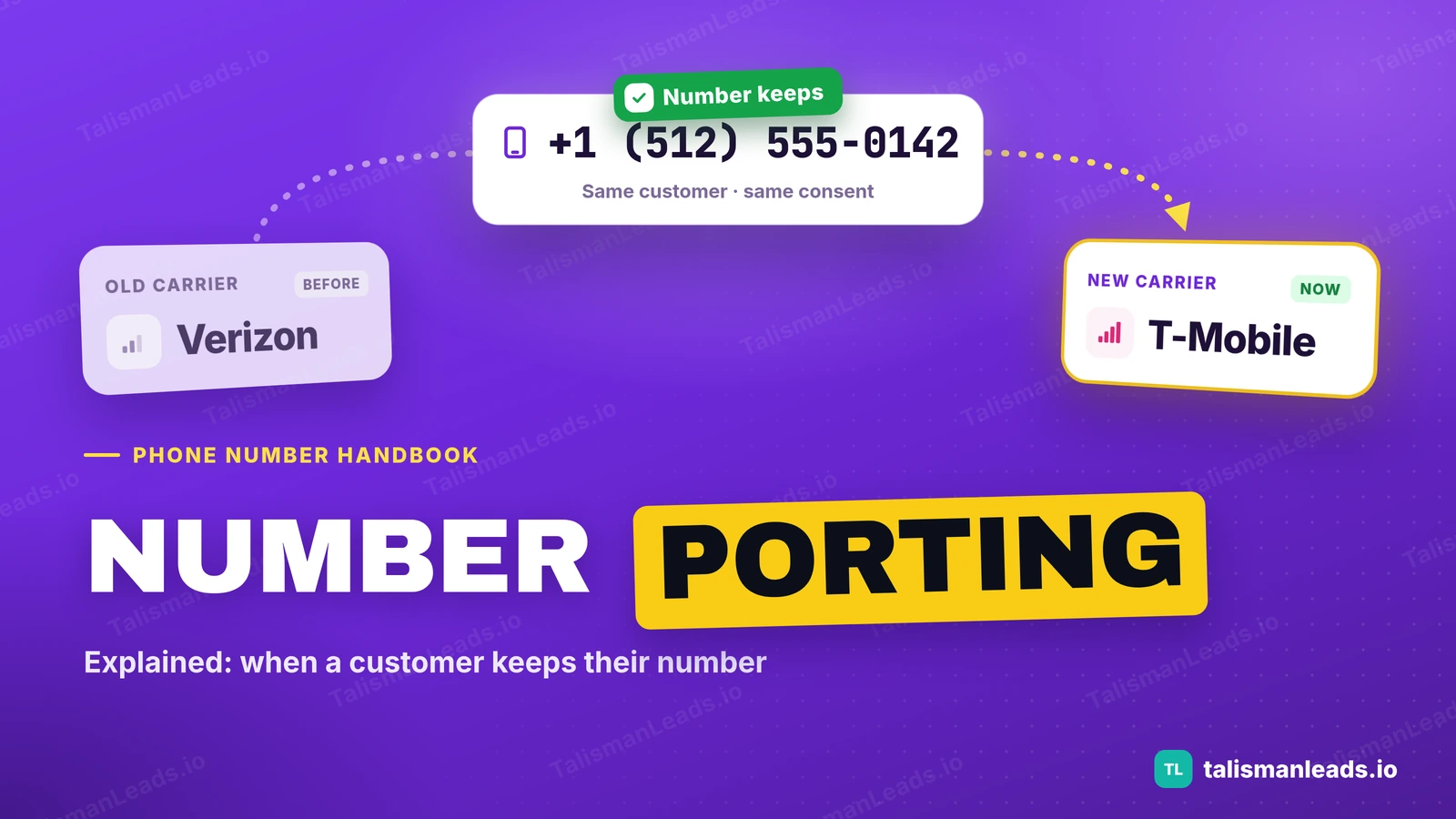
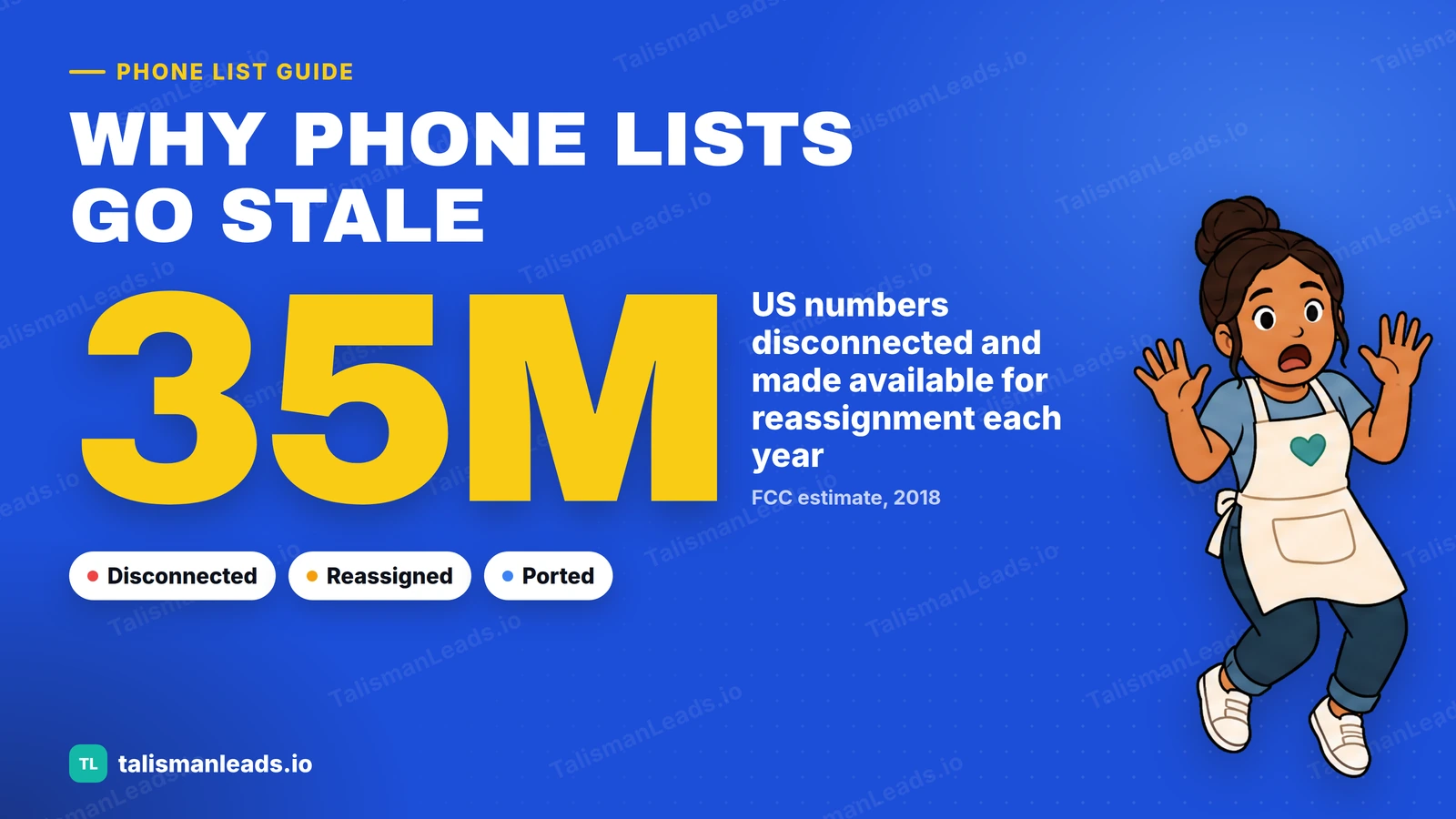
After a send, your provider reports each message's status. Divide "delivered" by the messages sent, and group the failures by error code. On Twilio, for example, 30006 means a landline or unreachable carrier, 30005 an unknown number that "may no longer exist", 30003 an unreachable handset and 30007 a message filtered by Twilio or the carrier. Only this measure catches numbers disconnected after you collected them. A carrier lookup reads published number-range tables, so a disconnected number still looks valid there (Why Phone Lists Go Stale explains why). Treat "delivered" as a strong signal, not proof: Vonage notes that a delivery receipt "is not an absolute guarantee".
What each problem costs#
Sends you pay for that cannot land#
Most providers bill a text once they have handed it to the carrier, whether or not it arrives. Twilio charges full termination fees whenever delivery was attempted, including messages that end as "undelivered". Filtered messages are still billed, and messages that fail outright carry a $0.001 processing fee. Plivo charges when a message is handed off to downstream carriers. So a text to a landline costs about the same as one that arrives, and a duplicate costs the full price for a message the customer already has. Use your provider's rate per segment; a long text can take more than one.
Carrier filtering and sender reputation#
Under CTIA's Messaging Principles and Best Practices, service providers "may block or filter message traffic" to stop unwanted messages, and senders should remove deactivated numbers from their opt-in lists, daily if possible. Twilio puts the link plainly: carriers "will start filtering heavily, or completely block traffic" when numbers draw complaints or high opt-out rates. Texts to deactivated numbers that now belong to someone else can be marked as spam, which leads to more filtering. On A2P 10DLC, a campaign that draws excessive complaints can be suspended. A landline bounce on its own is wasted money. Complaints and opt-outs from people who did not expect your text are what damage your sender reputation.
Support load#
Duplicates and stale numbers bring replies ("Why did I get this twice?", "Wrong number") that someone has to read and answer, and some of those customers reply STOP. There is no reliable public figure for this cost; count the replies to your next campaign and you have your own.
Compliance risk#
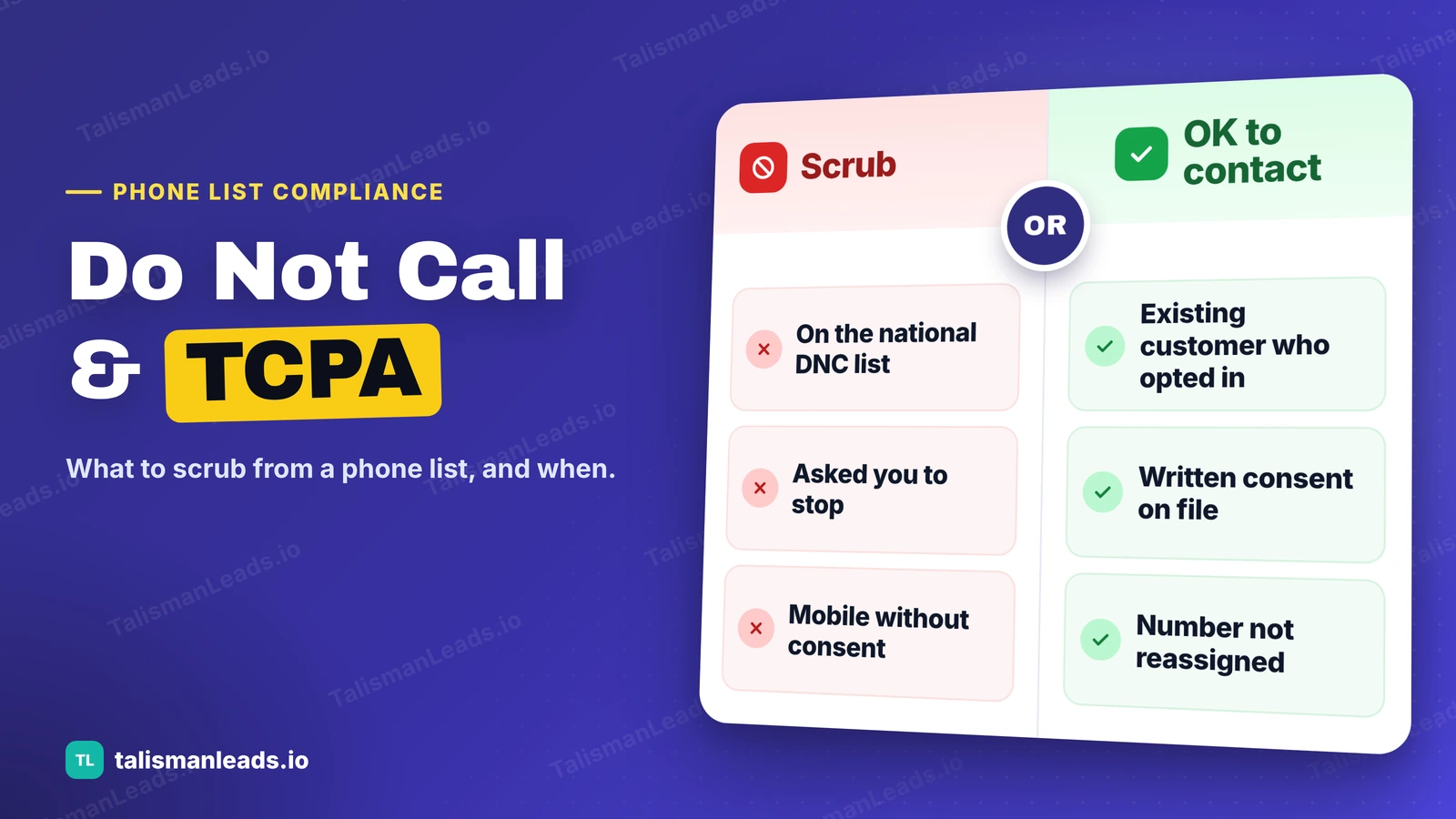
A marketing text to someone who did not agree to it is a legal problem, not a delivery problem. The Telephone Consumer Protection Act lets a person sue for $500 per violation, up to three times that if the violation was willful or knowing. A reassigned number, a missed opt-out or a number on the Do Not Call Registry can each lead there. Do Not Call and TCPA for Phone Lists covers what to scrub and when. This is not legal advice.
A worked example you can redo with your own numbers#
Every figure below is an example, made up to show the arithmetic. None of them is an average from real lists. Replace each one with what you measure.
- The list: 10,000 customer numbers, all US, all with consent.
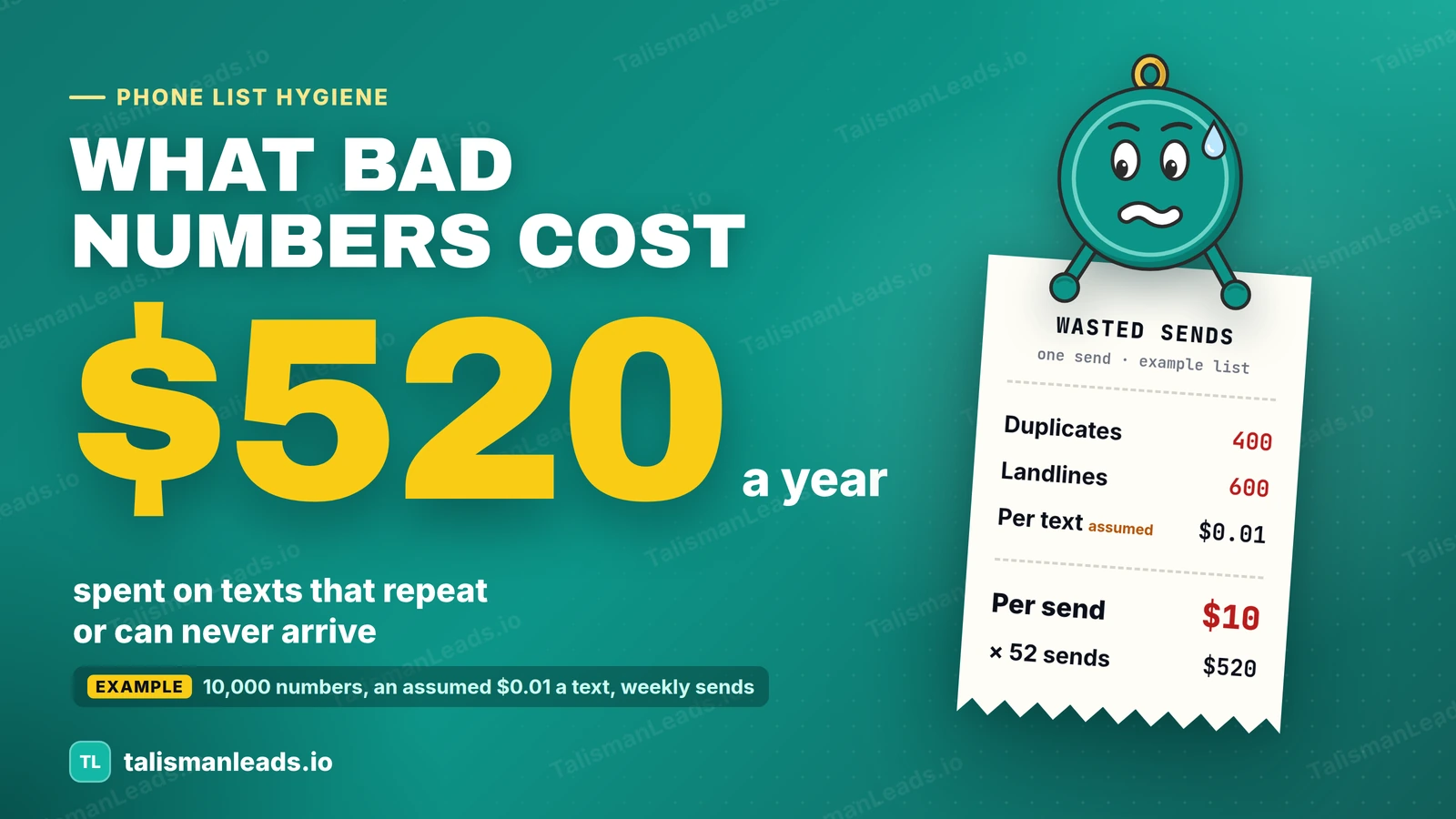
- Example shares: 4% duplicates (400 extra copies of numbers already on the list), 6% landlines (600) and 2% invalid lines (200).
- Assumed price: $0.01 per text, one segment each. This is a round assumption: use your provider's real rate. For scale, Twilio's US list price on 23 November 2026 was $0.0083 per segment plus a carrier fee of about $0.0035 to $0.005.
- Assumed frequency: one send a week, 52 a year.
The duplicates and landlines are 1,000 texts per send that are billed but do no good: 1,000 × $0.01 = $10 per send, or $520 a year at 52 sends. The 200 invalid lines are left out of the sum on purpose. A provider may refuse a malformed number before sending (Twilio then charges at most its $0.001 fee), but those numbers still count against your error rate.
Now the check. The free Bulk Carrier Lookup covers 10,000 numbers in a day. As one file on the Number Carrier Lookup, all 10,000 cost $1.20: the price is $1.20 per 10,000 numbers, the 2,000-number minimum per file does not apply at this size, and the exact price shows before you confirm. Removing duplicates and invalid lines with the Number Cleaner is free. In the example, one check costs less than a single week's wasted sends, and it is done before the first one.
The example leaves out filtering, replies and legal exposure, which are harder to price. More landlines, a higher price per text or more sends move the figure up quickly.
A routine to keep the list measured#
Before each campaign
- Run the list through the Number Cleaner: E.164, duplicates and invalid lines out. Note both counts.
- Check line type on the numbers added since the last check, and move landlines to calls or email.
- Remove every opt-out and scrub against the Do Not Call Registry where the rules require it.
- For RCS, iMessage or WhatsApp sends, check who is on the channel and send the rest by SMS.
After each campaign
- Record the delivery rate and the opt-out rate, and count failures by error code.
- Remove numbers that fail permanently (unknown number, landline). Look into a rise in filtered messages before the next send.
Monthly or quarterly
- Re-check the whole list, line type included, and look for numbers disconnected since your customers gave them to you, using the FCC's Reassigned Numbers Database or your provider's deactivation data. Monthly for a list you send to every week; quarterly, and before any reuse, for one used a few times a year.
Keep one row per campaign: date, list size, invalid %, duplicate %, landline %, delivered %, opt-out rate and filtered count. After a few months the rows show a list going stale before your customers or the carriers notice. To build that list in the first place, see How to Prepare and Validate a Phone List Before a Campaign.
Frequently asked questions#
What is phone list hygiene?#
Keeping a phone list accurate and lawful to send to: one format, no duplicates or invalid numbers, landlines off the texting list, opt-outs removed and disconnected numbers dropped, checked before and after every campaign.
Do I pay for texts that are not delivered?#
Usually yes. Twilio charges the full price for any message it attempted to deliver, including "undelivered" ones, and bills filtered messages too. Plivo charges once a message reaches the carrier. Check your own provider's terms.
What opt-out rate is too high?#
There is no single official threshold. Twilio's Health Score treats under 1% as healthy and warns that over 3% may lead to carrier filtering.
Can a carrier lookup find disconnected numbers?#
No. A lookup based on numbering-plan tables shows validity, line type, carrier and location, and a disconnected or reassigned number can still look valid. Use your provider's delivery report and deactivation data and the FCC's Reassigned Numbers Database.
How much does it cost to check a 10,000-number list?#
It can be free: the Bulk Carrier Lookup covers 10,000 numbers a day without an account, and the Number Cleaner is free with an account. As one file on the paid Number Carrier Lookup, 10,000 numbers cost $1.20, quoted before you confirm. A check that cannot be completed goes back to your balance, and businesses can apply for a $5, 14-day free trial.
Measure your own list today with the free Bulk Carrier Lookup, then put your own shares and your own price per text into the example above.
Was this helpful?